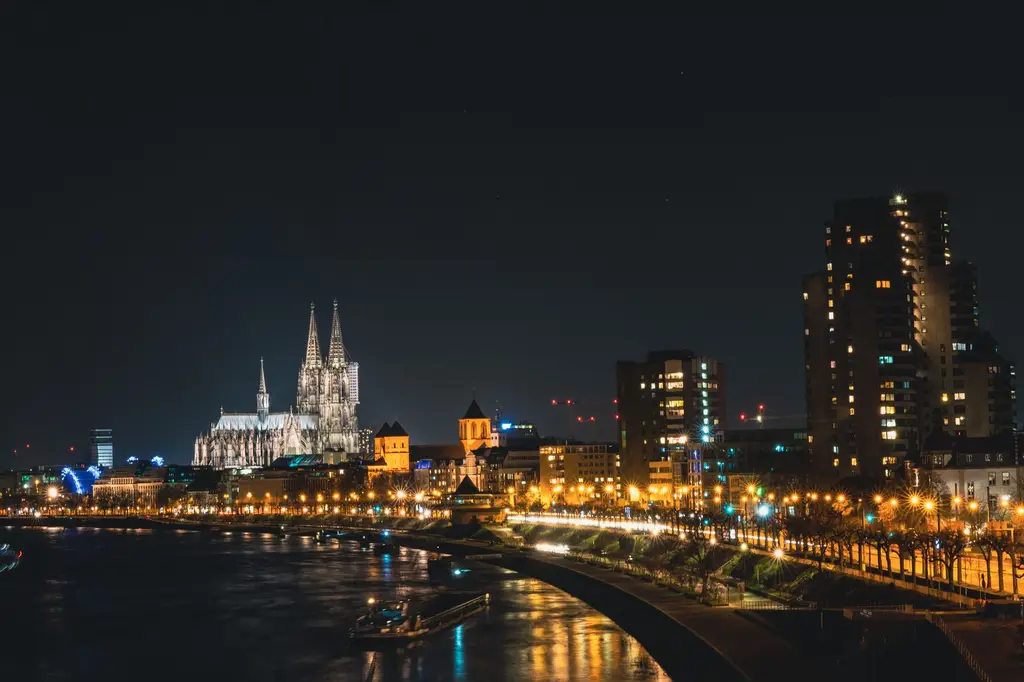
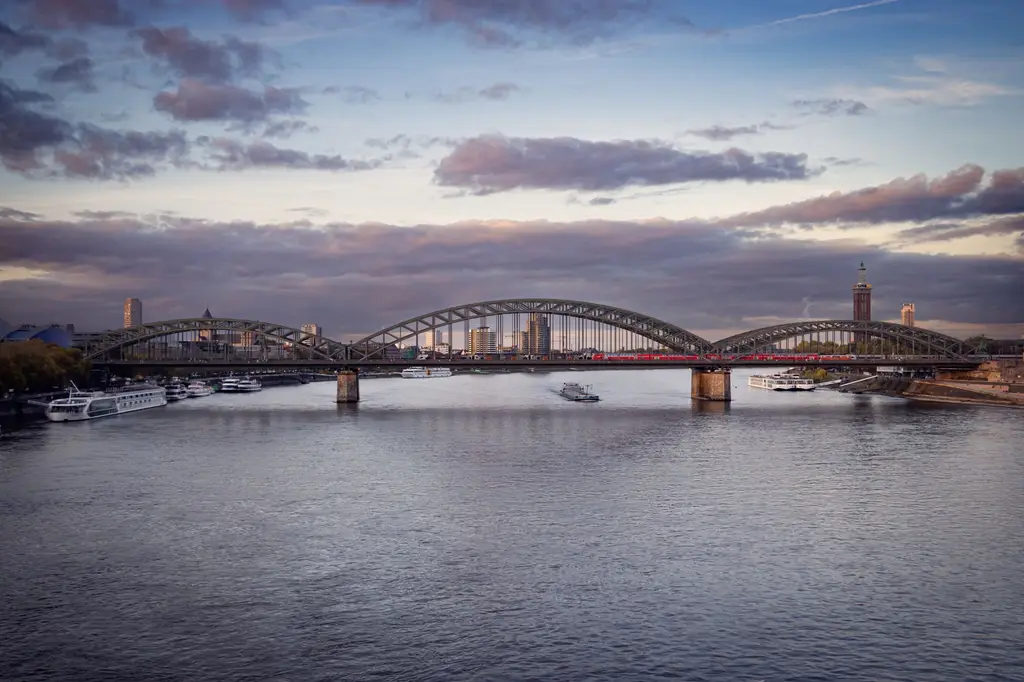
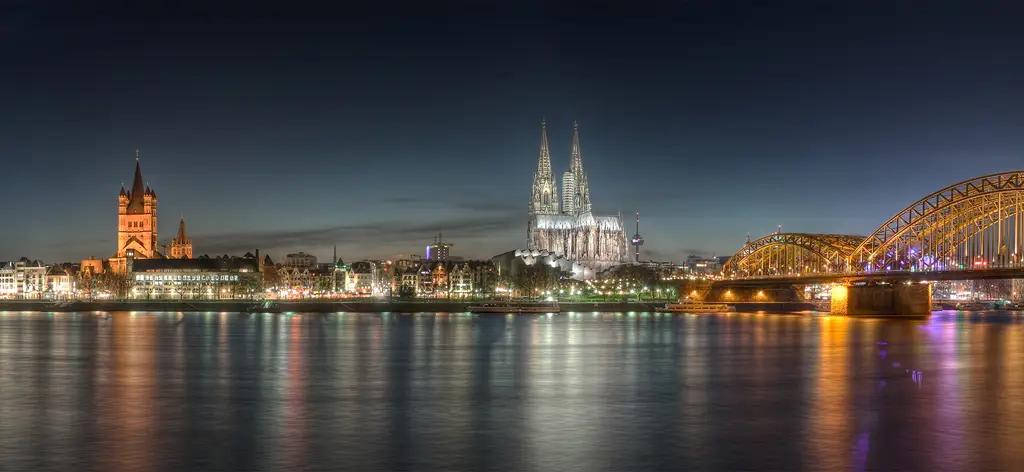
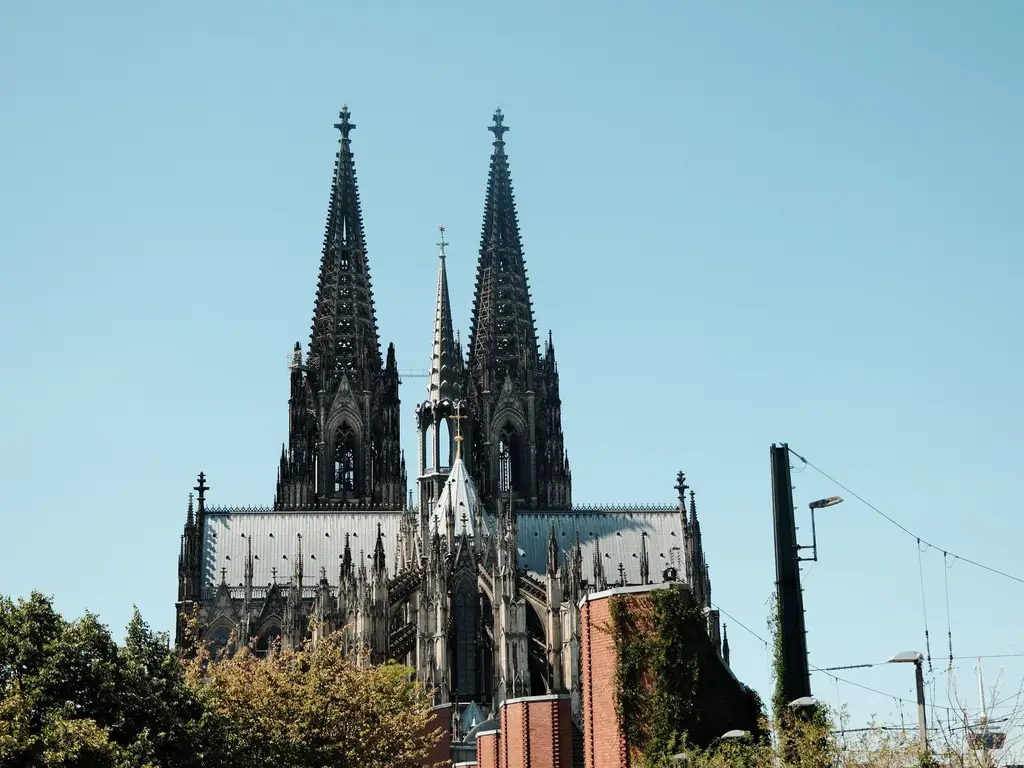
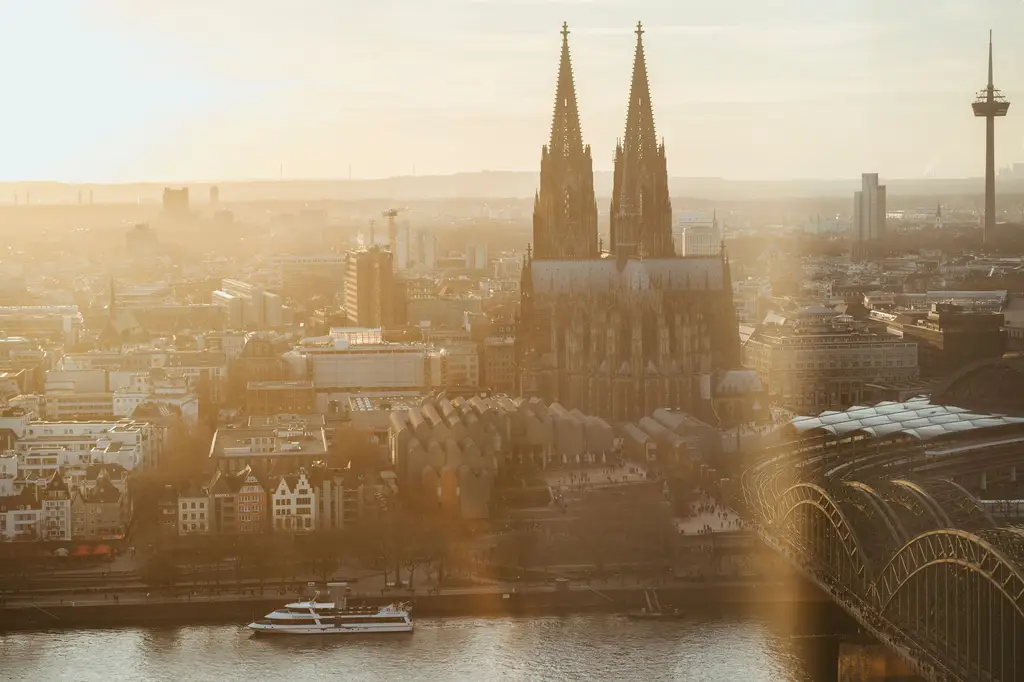
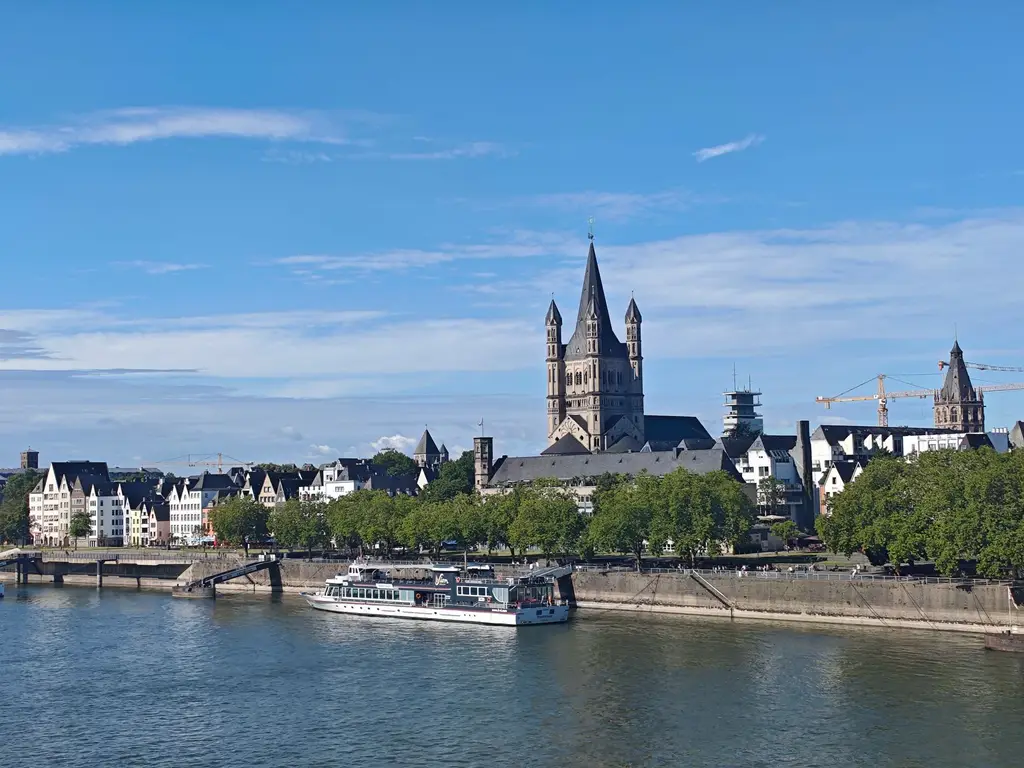
Cologne is small enough to feel walkable within a day and dense enough with things worth doing that two or three days rarely feel rushed. The cathedral, Kölner Dom, dominates the skyline the moment you step out of the main train station, close enough that visitors are routinely startled by how immediate it is. Like most of Germany's Rhine cities, Cologne was flattened in the Second World War and rebuilt, so what looks old in the centre is often a careful postwar reconstruction rather than a surviving original, the cathedral being the notable exception since it stood through the bombing. What sets Cologne apart from Germany's bigger cities is scale and temperament: it is more relaxed than Frankfurt, less monumental than Berlin, and has a strong local identity built around Kölsch beer, carnival season, and a rivalry with Düsseldorf that locals bring up unprompted. The Rhine runs through the middle of the city and the old town along its banks is genuinely pleasant to walk, particularly at dusk when the cathedral is lit. It is a city best treated honestly: two to three days covers it well, and anything longer should lean on the Rhine Valley towns and nearby cities within easy train reach.
The cathedral's size right outside the train station catches almost everyone off guard the first time, and it's one of the few times a famous landmark actually looks bigger in person than in photos.
The tower climb is genuinely tough, 533 steps with no way to bail out partway except turning back the way you came. Worth it, but know what you're signing up for.
I would not spend more than two or three days in Cologne itself. It's a good city, not a deep one, and the Rhine Valley towns and Düsseldorf nearby are a better use of a fourth or fifth day than pushing to find more to do inside the city.
Kölsch culture takes some getting used to if you're not from here, the small glasses and automatic refills feel odd at first and then make total sense by the second round.
The rebuilt old town is pretty but I'd rather spend an hour on the Rhine promenade at dusk than photographing the same colourful facades everyone else is.
Photo by Cologne_-_Panoramic_Image_of_the_old_town_at_dusk.jpg: Ahgee ASR688
derivative work: ZH2010 (talk), licensed CC BY-SA 3.0, via Wikimedia Commons
Itineraries
The cathedral, the old town, and a Kölsch dinner, Cologne's essentials in a single day.
Day 1: Cologne in a day
Morning
Kölner Dom, both the cathedral interior and the tower climb if you have the legs for 533 steps.
Afternoon
Museum Ludwig next door, then a walk through the old town along the Rhine.
Evening
A traditional Brauhaus dinner with Kölsch in the Altstadt or Belgian Quarter.
Tip: Do the tower climb before lunch, the exertion is easier on an empty-ish stomach and the morning light is better for photos.
The full city core at an unhurried pace, honestly enough time for what Cologne offers.
Day 1: The cathedral and old town
Morning
Kölner Dom cathedral and tower.
Afternoon
Museum Ludwig, then the old town along the Rhine.
Evening
Brauhaus dinner in the Altstadt.
Tip: Check the mass schedule before visiting to avoid a service closure.
Day 2: Museums and the Belgian Quarter
Morning
Chocolate Museum.
Afternoon
Wander the Belgian Quarter's independent shops and cafes.
Evening
Dinner in the Belgian Quarter, a livelier, more local scene than the old town.
Tip: The Chocolate Museum can queue on weekends, go on a weekday morning if possible.
Day 3: Ehrenfeld and a slower finish
Morning
Explore Ehrenfeld, a less touristy district with a growing food scene.
Afternoon
Free time for shopping or a final Rhine walk.
Evening
A final Kölsch round wherever the day leads.
Tip: Ehrenfeld is a good gauge of daily Cologne life away from the tourist core.
The 3-day city core plus two day trips: Bonn and the Rhine Valley.
Day 1: The cathedral and old town
Morning
Kölner Dom cathedral and tower.
Afternoon
Museum Ludwig, old town walk.
Evening
Brauhaus dinner.
Tip: Check mass times first.
Day 2: Museums and the Belgian Quarter
Morning
Chocolate Museum.
Afternoon
Belgian Quarter.
Evening
Dinner in the Belgian Quarter.
Tip: Go early to skip weekend queues.
Day 3: Ehrenfeld and a slower finish
Morning
Ehrenfeld district.
Afternoon
Free time.
Evening
Final Kölsch round.
Tip: A good look at everyday Cologne.
Show all 5 days
Day 4: Day trip: Bonn
Morning
Train to Bonn (around 25 minutes), former West German capital, the Beethoven House.
Afternoon
Bonn's old town and the government quarter's former buildings.
Evening
Return to Cologne for dinner.
Tip: Bonn is smaller and quieter than Cologne, a good contrast for the day.
Day 5: Day trip: Rhine Valley
Morning
Train to Bacharach or Rüdesheim, vineyard terraces and riverside walks.
Afternoon
A short Rhine cruise between towns if schedules allow.
Evening
Return to Cologne for a final dinner.
Tip: Verify current train and boat schedules before committing, this is a longer day than Bonn.
A week built honestly: the 3-day city core plus four day trips across the Rhine region, since Cologne itself does not fill a week.
Day 1: The cathedral and old town
Morning
Kölner Dom cathedral and tower.
Afternoon
Museum Ludwig, old town walk.
Evening
Brauhaus dinner.
Tip: Check mass times first.
Day 2: Museums and the Belgian Quarter
Morning
Chocolate Museum.
Afternoon
Belgian Quarter.
Evening
Dinner in the Belgian Quarter.
Tip: Go early to skip weekend queues.
Day 3: Ehrenfeld and a slower finish
Morning
Ehrenfeld district.
Afternoon
Free time.
Evening
Final Kölsch round.
Tip: A good look at everyday Cologne.
Show all 7 days
Day 4: Day trip: Bonn
Morning
Train to Bonn, Beethoven House.
Afternoon
Old town and government quarter.
Evening
Return to Cologne.
Tip: A quieter contrast to Cologne.
Day 5: Day trip: Düsseldorf
Morning
Train to Düsseldorf (around 25-30 minutes), the old town and Rhine promenade.
Afternoon
Königsallee shopping boulevard and the media harbour architecture.
Evening
Return to Cologne, or stay for dinner in Düsseldorf's own old town, which has its own beer culture (Altbier) worth comparing to Kölsch.
Tip: Mentioning you prefer one city's beer to the other in front of a local from either is a reliable way to start a debate.
Day 6: Day trip: Rhine Valley
Morning
Train to Bacharach or Rüdesheim.
Afternoon
Vineyard terraces and a short Rhine cruise.
Evening
Return to Cologne.
Tip: Verify schedules ahead of time.
Day 7: Day trip: Aachen
Morning
Train to Aachen (around 50 minutes), Charlemagne's former capital and its cathedral, a UNESCO World Heritage site.
Afternoon
Old town and the thermal baths district.
Evening
Return to Cologne for a final dinner.
Tip: Aachen's cathedral predates Cologne's by centuries, a genuinely different building worth the trip.
Two weeks using Cologne as a base for the wider Rhine and Rhineland region, honestly regional rather than city-heavy since Cologne itself is a 2-3 day city.
Day 1: The cathedral and old town
Morning
Kölner Dom cathedral and tower.
Afternoon
Museum Ludwig, old town walk.
Evening
Brauhaus dinner.
Tip: Check mass times first.
Day 2: Museums and the Belgian Quarter
Morning
Chocolate Museum.
Afternoon
Belgian Quarter.
Evening
Dinner in the Belgian Quarter.
Tip: Go early to skip weekend queues.
Day 3: Ehrenfeld and a slower finish
Morning
Ehrenfeld district.
Afternoon
Free time.
Evening
Final Kölsch round.
Tip: A good look at everyday Cologne.
Show all 14 days
Day 4: Day trip: Bonn
Morning
Train to Bonn, Beethoven House.
Afternoon
Old town.
Evening
Return to Cologne.
Tip: A quieter contrast to Cologne.
Day 5: Day trip: Düsseldorf
Morning
Train to Düsseldorf, old town and Rhine promenade.
Afternoon
Königsallee and media harbour.
Evening
Return or stay for dinner.
Tip: Compare Altbier to Kölsch at your own risk.
Day 6: Travel to the Rhine Valley
Morning
Train to Bacharach, check into a base for two nights.
Afternoon
Walk the town walls and vineyard terraces.
Evening
A quiet riverside dinner.
Tip: Staying overnight beats a rushed day trip.
Day 7: Rhine Valley by boat
Morning
A longer Rhine cruise past castles and terraces.
Afternoon
Stop at another riverside town.
Evening
Return to your base town.
Tip: Verify current cruise schedules.
Day 8: Travel to Aachen
Morning
Train to Aachen, check in for one night.
Afternoon
Aachen Cathedral and the old town.
Evening
Dinner in Aachen.
Tip: The cathedral predates Cologne's by centuries.
Day 9: Return to Cologne region, day trip to the Ahr Valley
Morning
Train toward the Ahr Valley wine region, a lesser-known German wine area.
Afternoon
A vineyard walk or wine tasting.
Evening
Return to Cologne.
Tip: Quieter and less touristy than the Rhine's more famous stretch.
Day 10: Free day in Cologne
Morning
Revisit anything missed, or a slower museum morning.
Afternoon
Shopping or a park walk.
Evening
Dinner in a district not yet covered.
Tip: Use this as a buffer day.
Day 11: Day trip: Münster
Morning
Train to Münster (around 1.5-2 hours), a bike-friendly university city.
Afternoon
Old town and the historic city hall.
Evening
Return to Cologne.
Tip: A longer day trip, worth an early start.
Day 12: Day trip: Trier
Morning
Train to Trier (around 2.5 hours), Germany's oldest city with substantial Roman ruins.
Afternoon
Porta Nigra and the Roman baths.
Evening
Return to Cologne.
Tip: This is a long day, an overnight stay in Trier is a reasonable alternative.
Day 13: Last full day in Cologne
Morning
A final walk through the old town.
Afternoon
Any remaining museum or shopping.
Evening
A last Kölsch round.
Tip: Keep this day light before travel.
Day 14: Departure
Morning
Pack and any final errands.
Afternoon
Head to the airport or onward train.
Evening
Departure.
Tip: Cologne Bonn Airport is a quick S-Bahn ride from the centre, factor in less buffer than a bigger hub.
Cathedral generally open daily 6:00-20:00; tourist visiting hours Mon-Sat 10:00-17:45 (last admission 17:30), Sun and church holidays 13:30-16:30 (last admission 16:15)·As of July 1, 2026, a paid ticket is required for tourist visits (the north transept remains free for prayer outside service times). Exact current ticket price was not confirmed from a working official source, verify on koelner-dom.de before visiting.·1-1.5 hours
walk in, though checking the mass schedule first avoids arriving during a service closure
Entry was free for most of the cathedral's modern history and became ticketed from July 2026. Confirm the current price before you go, don't rely on older guides that still say free.
March-October 9:00-18:00, November-February 9:00-16:00, last admission 30 minutes before closing·check current price on the official site, verify before visiting·45 minutes-1 hour
walk in, separate ticket from the cathedral entry, expect a queue in peak season
533 steps with no elevator, this is a genuine climb, not a casual one. The reward is a full view over the old town and the Rhine.
The rebuilt old town's colourful facades photograph well but are largely postwar reconstruction. Walk it at dusk when the cathedral is lit for the best version of the view.
4
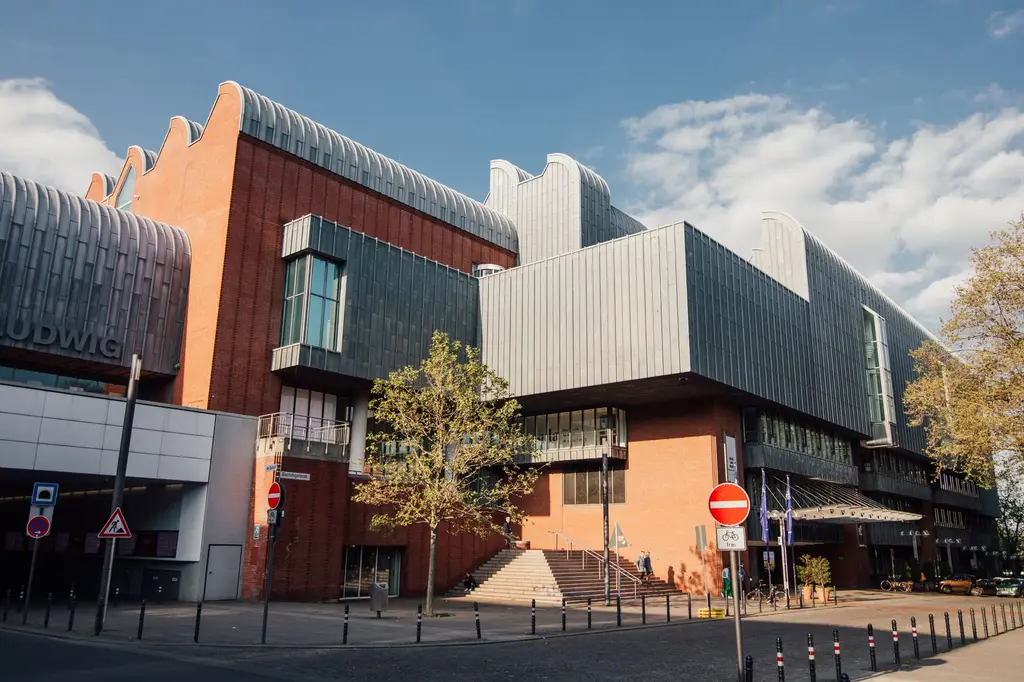
Museum Ludwig
Tue-Sun 10:00-18:00, first Thursday of the month until 22:00·around EUR 13-14 standard adult, verify current price·2 hours
Closed Monday
A strong modern and contemporary art collection right next to the cathedral, an easy add-on to a cathedral visit.
5
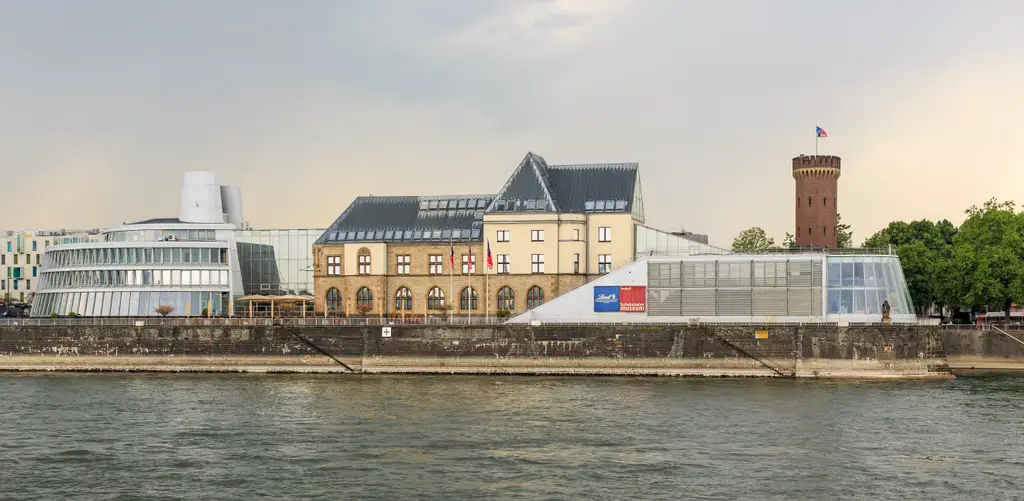
Chocolate Museum (Schokoladenmuseum)
generally 10:00-18:00 weekdays, later on weekends, verify current seasonal hours·around EUR 15-16 standard adult, verify current price·1.5-2 hours
walk in, though it can queue on weekends
More substantial than the name suggests, covering the full history and production process, not just a gift shop with a museum attached.
6
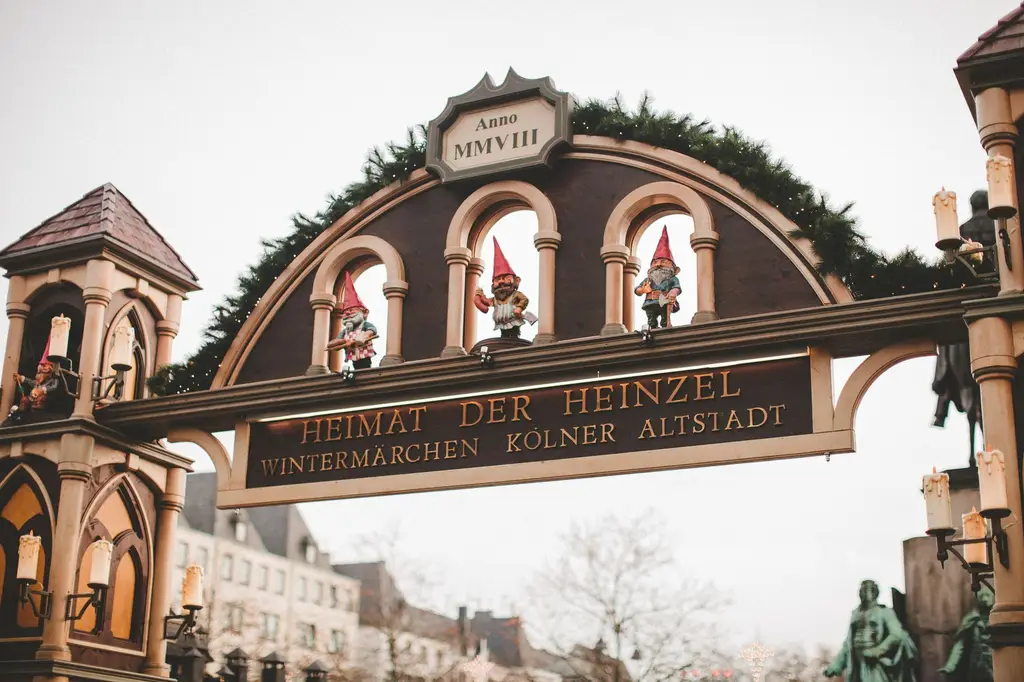
Cologne Christmas markets
typically late November through December 23, exact dates for a given year set annually·free entry to browse, individual food and drink stalls priced separately·2-3 hours across multiple markets
Cologne runs several distinct markets at once, around the cathedral, at Rudolfplatz, Heumarkt, and Alter Markt, each with a different character. Confirm exact dates for the current year on koelntourismus.de closer to the time.
Belgian Quarter
as of 2026-09
Viral
Neighbourhood of late-19th-century architecture, independent boutiques, galleries and street art centred on Brüsseler Platz, with the Neo-Romanesque St. Michael church as its social hub. Still the city's most creative district and not overrun the way similar quarters in bigger cities are. Good for a few unhurried hours rather than one photo stop.
Kölner Seilbahn (Rhine cable car)
as of 2026-09
Viral
A cable car crossing the Rhine between the Rheinpark and the zoo, operating since 1957, one of the only cable-car systems in Europe designed to span a major river. Confirmed running, but only seasonally from April to October, roughly 10am to 6pm. Check it's within season before building a day around it.
Schokoladenmuseum (Chocolate Museum)
as of 2026-09
Viral
A museum tracing chocolate's history from Aztec origins to modern production, with a working 1.5-metre chocolate fountain holding around 200 kilograms of liquid chocolate. Won a 2026 TripAdvisor Travelers' Choice award and ranked among the top attractions worldwide by user reviews, so this isn't just marketing copy. Gets busy with families, go earlier in the day.
Cologne Cathedral tower climb
as of 2026-09
Viral
A 533-step climb up the south tower of the cathedral, ticketed separately from the free-entry nave, open year-round with guided belfry tours available through the cathedral staff. Worth the extra ticket and the legwork if you want a rooftop view over the Rhine, skip it if stairs are a problem or you're pressed for time.
Ehrenfeld district
as of 2026-09
Viral
A former industrial district turned into Cologne's most culturally active area outside the centre, with large-scale street art, independent music venues and a mixed residential population. Grittier and less polished than the Belgian Quarter, which is the point. Better for an evening out than a daytime sightseeing checklist.
Where to stay
Altstadt (old town)
Suits: first-time visitors who want everything on foot
Central, touristy, and loud on weekend nights near the Rhine promenade bars.
Belgisches Viertel (Belgian Quarter)
Suits: food, independent shops, and a quieter evening scene
A short tram ride from the centre, popular with a younger, more local crowd.
Ehrenfeld
Suits: budget travellers and a more local, less touristy feel
A former working-class district now with a growing food and bar scene, further from the centre but on the U-Bahn.
Getting there and around
Getting there
Cologne Bonn Airport (CGN) sits about 15km southeast of the centre, connected by a direct S-Bahn (S13/S19) to Köln Hauptbahnhof in around 15 minutes for roughly EUR 3.50. Cologne's main train station is also a major ICE hub, putting Frankfurt, Düsseldorf, and Brussels within 1-2 hours.
Getting around
The city centre is compact and walkable, with the cathedral, old town, and Rhine promenade all within 20 minutes of each other on foot. The KVB network of trams and U-Bahn covers the wider city if needed. A single ticket costs around EUR 3.20, a day ticket around EUR 9. The Deutschlandticket covers all of it.
Map
City
Recommended (numbered)
Mentioned in an itinerary
Locations on this map
Cologne50.94, 6.96
Kölner Dom (Cologne Cathedral)50.94, 6.96
Kölner Dom tower climb50.94, 6.96
Rhine promenade and old town (Altstadt)50.94, 6.96
Museum Ludwig50.94, 6.96
Chocolate Museum (Schokoladenmuseum)50.93, 6.96
Cologne Christmas markets50.93, 6.93
Brauhaus50.94, 6.96
Bonn50.87, 7.14
West German50.85, 7.12
Beethoven House50.74, 7.10
Rhine Valley50.16, 7.73
Bacharach50.06, 7.77
Aachen50.93, 6.96
Charlemagne50.78, 6.08
UNESCO World Heritage50.16, 7.73
German50.94, 6.96
Trier49.76, 6.64
Roman50.94, 6.95
Porta Nigra49.76, 6.64
What it costs
Stay
Food
Transport
Activities
Daily cost breakdown, EUR per person
Tier
Stay
Food
Transport
Activities
Total
Budget
EUR 25
EUR 20
EUR 4
EUR 15
EUR 64
Mid-range
EUR 80
EUR 35
EUR 9
EUR 20
EUR 144
Splurge
EUR 170
EUR 65
EUR 18
EUR 35
EUR 288
A KVB day ticket (around EUR 9) covers transit. Cathedral entry and tower climb (verify current combined price), a bakery lunch (EUR 6-8), a Kölsch beer round and a sit-down dinner in the Belgian Quarter (EUR 20-25) puts a mid-range day around EUR 120-140 per person with a mid-range hotel room split two ways.
Money savers
The Rhine promenade and old town are free to walk and among the best things to do in the city regardless of budget.
Kölsch is served in small 200ml glasses by tradition, which keeps a round cheaper than it looks per glass, but rounds get replenished automatically until you put a coaster on top of your glass to signal you're done.
Museum Ludwig's first-Thursday late opening is a good time to visit if you're also curious about the reduced or free entry that some German museums offer on that evening, verify current terms before relying on it.
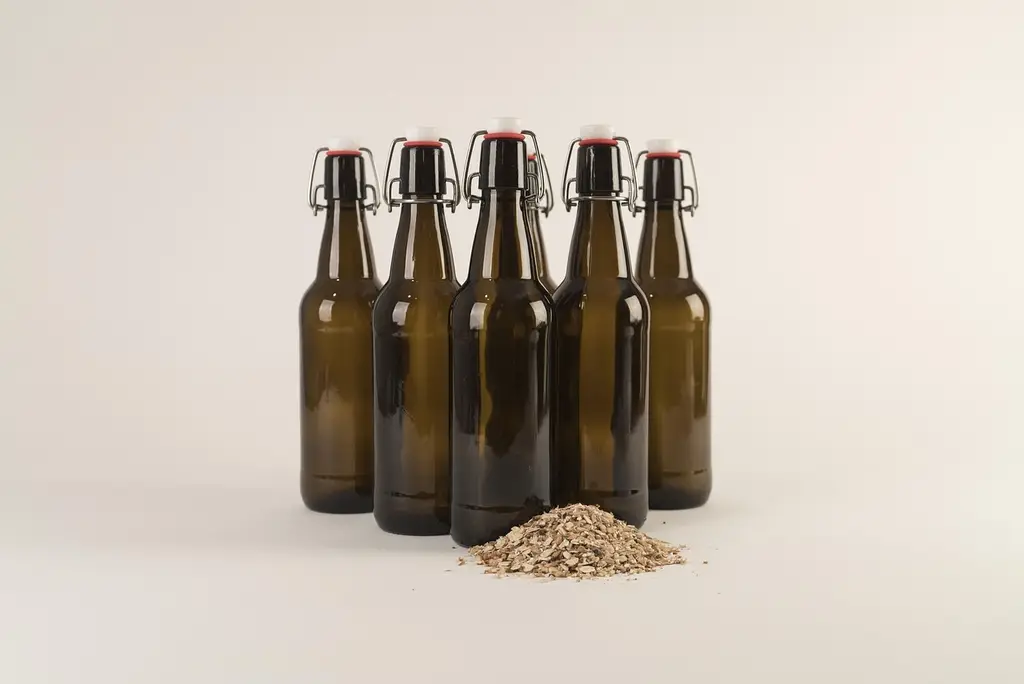
Cologne's food culture runs through its beer halls, and the Kolsch ritual is worth understanding before you sit down. It is a light, top-fermented beer served in small 0.2-liter glasses called Stangen, and waiters called Kobes simply refill your glass the moment it is empty, tracking your count on a coaster. They keep bringing fresh glasses until you place a beer mat on top of the empty one; that is the only way to signal you are done. Beyond the beer halls, the food is straightforward Rhineland cooking: blood sausage, potato dishes, rye bread. Sunday closures hit hard outside the old town, so anchor that day to a Brauhaus, most stay open.
EUR 2-3 per Stange·Brauhaus-style taverns across the old town and Belgian Quarter
Must try
A crisp, light lager unique to Cologne and legally protected by name. Let the Köbes keep refilling your Stange until you place a beer mat over the empty glass to stop.
Halve Hahn
EUR 4-6·traditional Brauhaus taverns
Must try
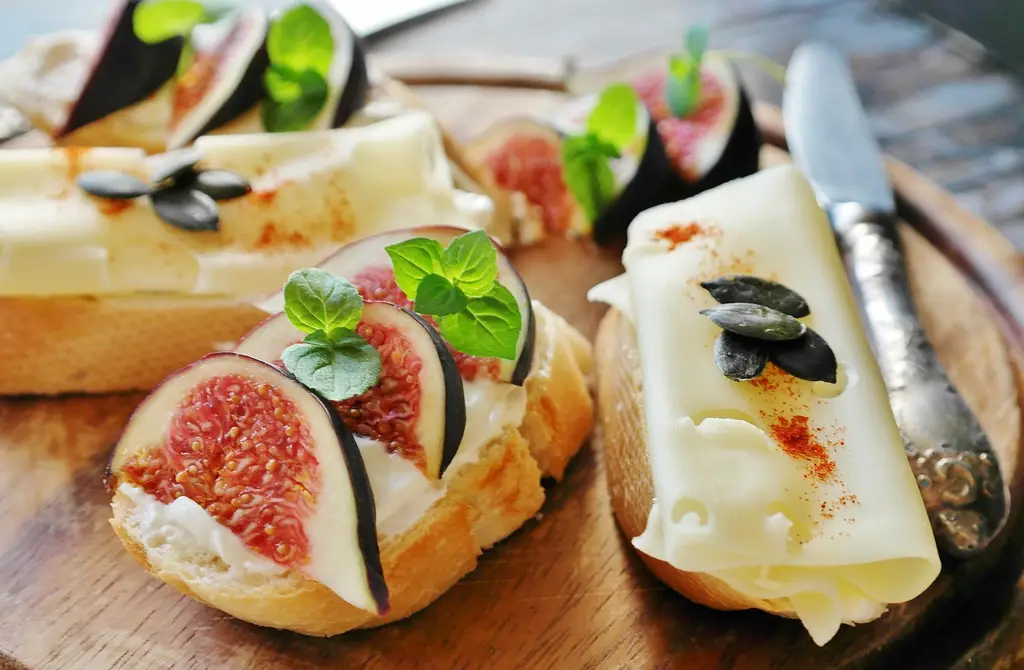
Despite the name, not chicken at all, a rye bread roll with aged Gouda, mustard and pickles. A classic beer hall order and a common source of confusion for first-timers expecting poultry.
Himmel un Ääd
EUR 11-15·traditional Gasthaus restaurants
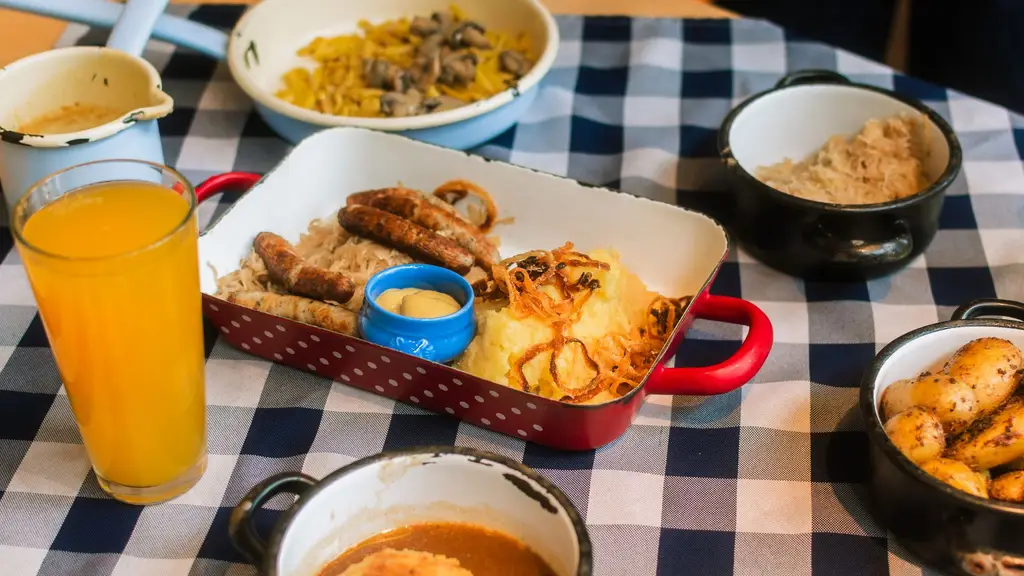
Mashed potato and apple sauce served with fried blood sausage and caramelized onions, a hearty Rhineland classic whose name translates as heaven and earth.
Rievkooche
EUR 3-5·Christmas markets and traditional kitchens
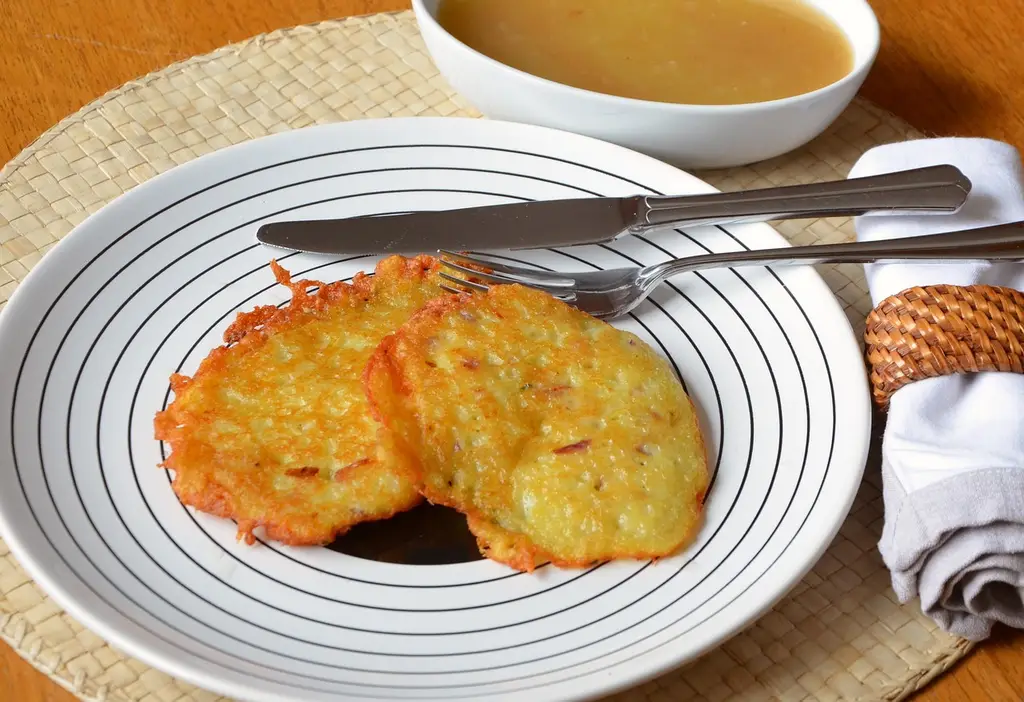
Fried potato pancakes served with apple sauce, a savoury-sweet street food staple most visible around the winter markets but available year-round in some Gaststätte.
Kölner Kaviar
EUR 5-7·traditional Brauhaus menus
Blood sausage sliced and served cold with onions and vinegar, a dry local joke of a name for what is a humble, cheap dish. Order it as a starter with beer.
Senfrostbraten
EUR 14-18·traditional Gasthaus restaurants
Roast beef in a mustard-cream sauce, a Rhineland comfort dish that shows up as a daily special more than a permanent menu fixture at most traditional Gasthaus kitchens.
Antonio Sane at Genusseria
as of 2026-09
Viral
Naples trained pizza maker known from social media for Neapolitan technique, now baking at Genusseria with a Monday all you can try tasting. Not a one week flash. He's been making pizza since childhood in Naples. The Monday tasting is a good way to judge it yourself instead of trusting the hype.
Impi
as of 2026-09
Viral
Ehrenfeld matcha bar selling the drink in cans that became a citywide phenomenon, with lines that spill into the surrounding streets. The hype has a cost. Neighbors filed a petition, the city sent tow trucks and issued fines, and the Nabu warned that discarded cups were harming hedgehogs. The matcha is decent. It's not worth an hour of your day.
Ehrenfeld
as of 2026-09
Viral
Former industrial district that has become where Cologne's food attention goes, with cafes and small counters drawing crowds from across the city. Better browsed on a weekday. Weekends bring parking chaos and queues that locals have started complaining about in the press.
Queueing for cookies, kebab and tiramisu
as of 2026-09
Viral
Cologne has developed a habit of long waits outside single-item shops, a pattern the Koelnische Rundschau wrote up. Half of it is worth it and half is people photographing a line. Ask what the wait actually is before joining one.
Budget coffee chains
as of 2026-09
Viral
LAP Coffee opened its fifth Cologne shop in July 2026, with the Chinese chain Cotti pushing into the same low price bracket. Cheap espresso done quickly, which Cologne genuinely lacked. The expansion is contested though, with pushback and vandalism reported in several German cities.
Safety and scams
Cologne is generally safe for tourists. The area immediately around the Hauptbahnhof and cathedral can feel crowded and chaotic with a visible presence of people asking for money, more a nuisance than a threat. Weekend nights in the old town get loud and crowded with a heavy drinking culture, keep the usual awareness around bags and belongings in that crush.
Common mistakes
Assuming cathedral entry is still free, it became ticketed from July 2026, budget for it.
Attempting the tower climb without checking opening hours first, the last admission cutoff is stricter than the general cathedral hours.
Trying to stretch a Cologne stay past three or four days without adding day trips, the city itself is compact.
Putting your Kölsch coaster down between sips instead of on top of the empty glass, which is the actual signal to stop the automatic refills.
Frequently asked questions
How many days do you need in Cologne?
Two to three days covers the cathedral, the old town, and the main museums comfortably. Cologne is compact, and a longer stay is better spent on day trips to Bonn, Düsseldorf, the Rhine Valley, or Aachen than trying to stretch the city itself.
Is Cologne Cathedral free to enter?
Not anymore for tourist visits. As of July 1, 2026, a paid ticket is required to visit as a tourist, though the north transept remains free for prayer outside service times. Verify the current ticket price on the cathedral's official site before you go.
Is the Cologne Cathedral tower climb worth it?
Yes, if you're up for 533 steps with no elevator and no way to turn back partway except retracing your steps. The view over the old town and the Rhine from the top is the payoff, and it's a separate ticket from cathedral entry.
What is Kölsch?
A pale, light, top-fermented beer unique to Cologne, served in small 200ml glasses at traditional Brauhaus taverns. Waiters keep bringing fresh glasses until you place your coaster on top of the empty one to signal you're done.
Is Cologne or Düsseldorf better to visit?
Both are close enough to visit together, about 25-30 minutes apart by train. Cologne has the cathedral and a livelier old town; Düsseldorf has a more polished Rhine promenade and its own beer tradition. A rivalry between the two cities is genuine and locals will have an opinion.
When are the Cologne Christmas markets?
Typically late November through December 23, spread across several distinct markets including one right by the cathedral, plus Rudolfplatz, Heumarkt, and Alter Markt. Exact dates are set annually, check koelntourismus.de closer to your travel dates.
Do shops close on Sundays in Cologne?
Yes, in line with national law, most retail shops are closed. Restaurants, cafes, and the cathedral stay open, and the Sunday cathedral visiting hours are shorter than weekdays due to services.
Is Cologne worth visiting if I've already seen Berlin or Munich?
Yes, it has a different character: smaller, more relaxed, built around the cathedral and the Rhine rather than grand boulevards or beer hall culture. It's a good addition to a Rhineland-focused leg of a longer Germany trip.