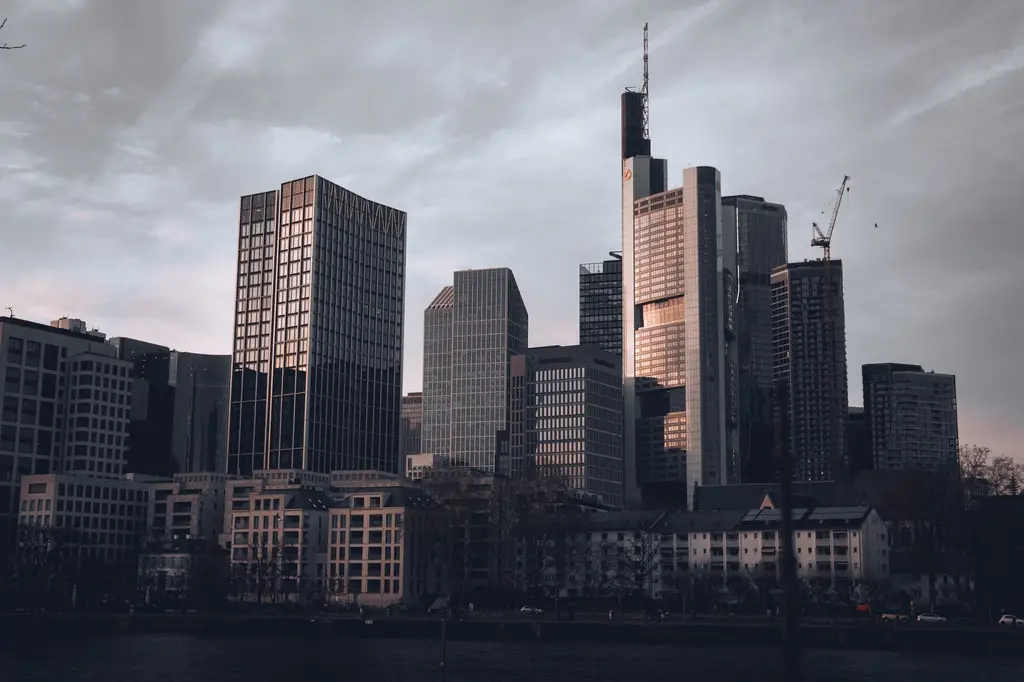
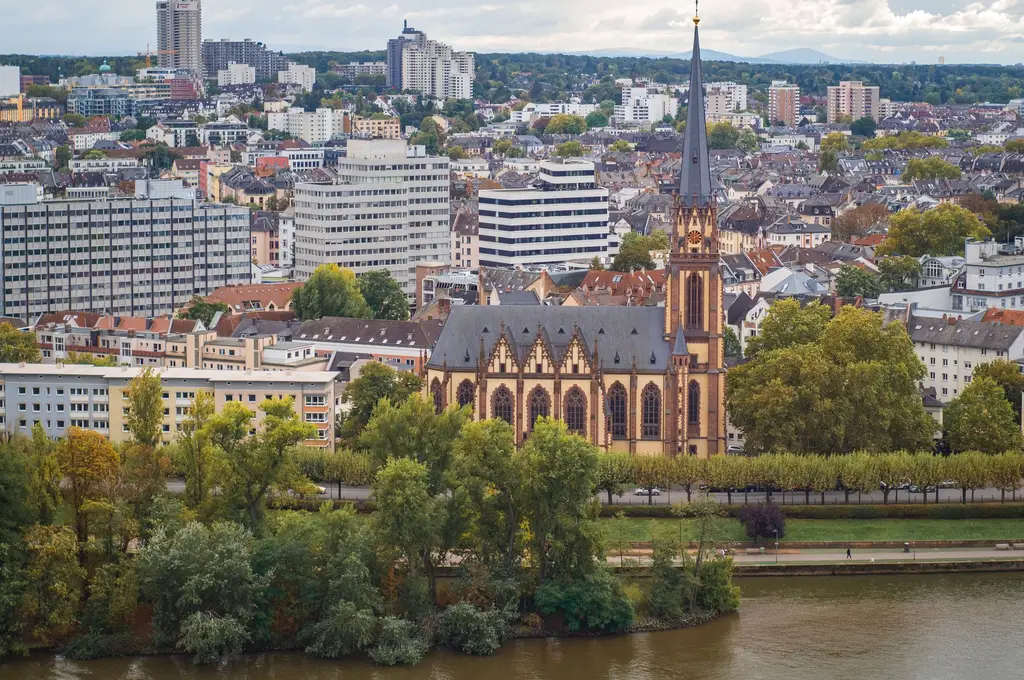
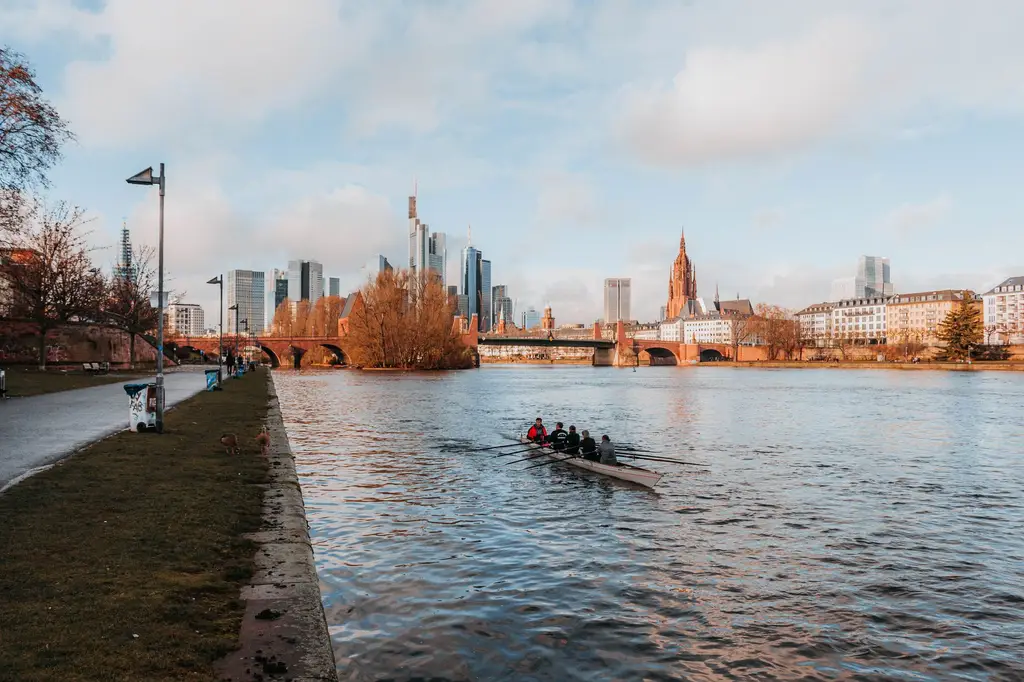
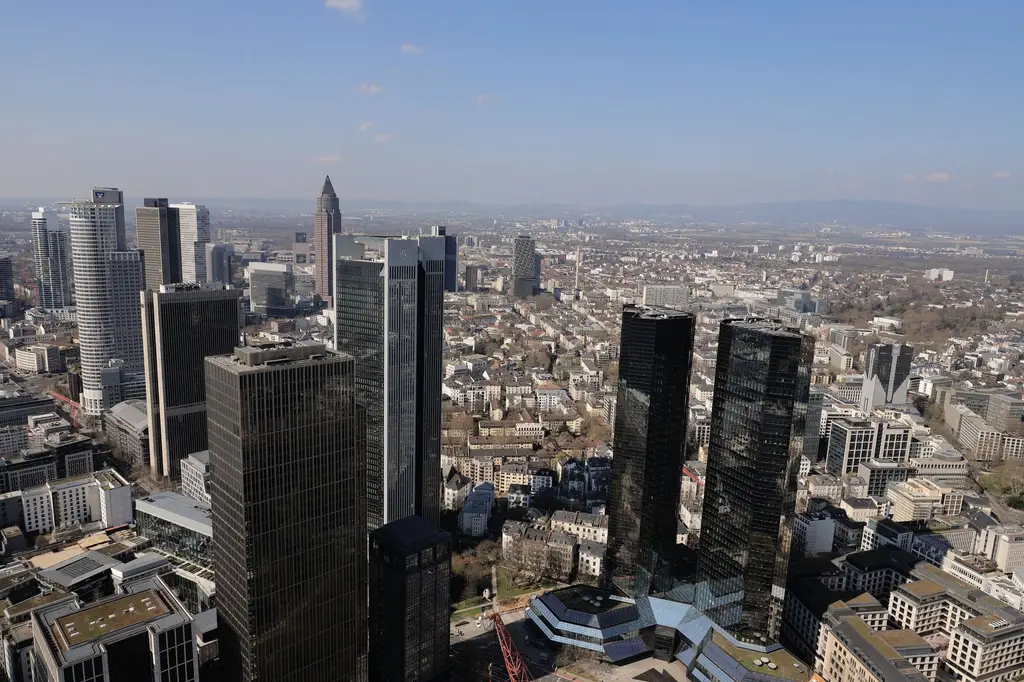
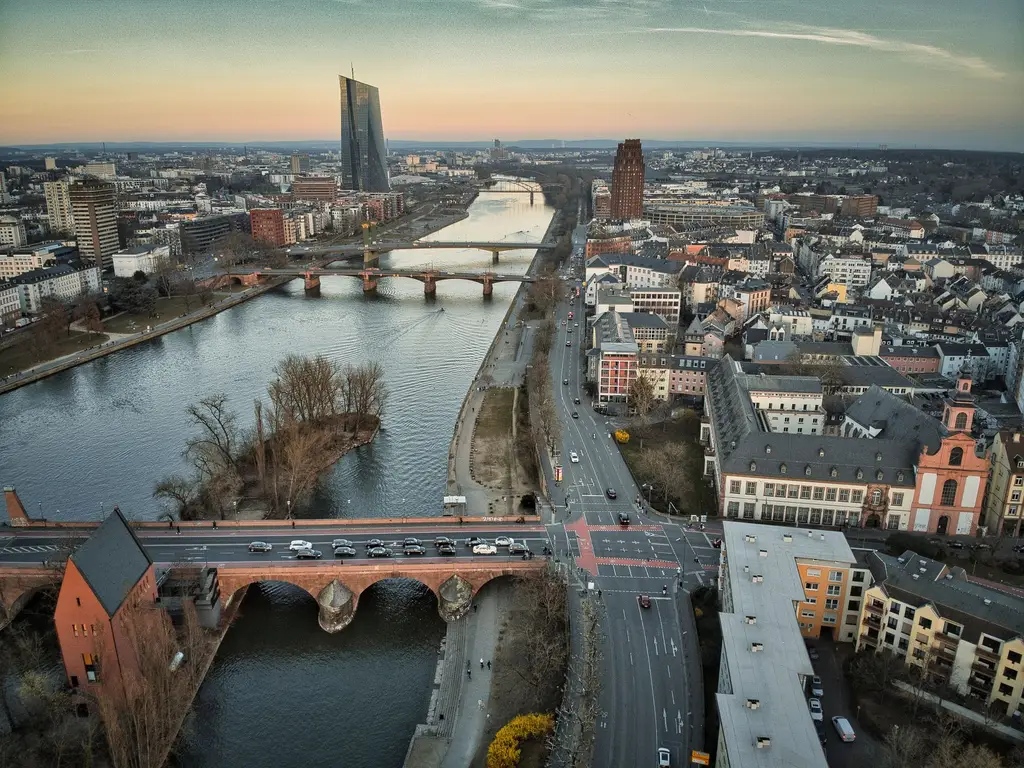
Frankfurt is honest about what it is: a financial and transit city first, a tourist destination second. This is the headquarters city for the European Central Bank and Deutsche Bundesbank, and its skyline of glass towers, nicknamed Mainhattan, is unlike anything else in Germany, most German cities kept height restrictions that Frankfurt didn't. That skyline sits a short walk from Römerberg, a reconstructed medieval old town square rebuilt largely from scratch after wartime bombing, which tells you something about the city's relationship with its own history: it moved on and rebuilt to look forward rather than freezing itself as a museum piece. Most travellers pass through Frankfurt Airport, Europe's busiest Lufthansa hub, without spending a night in the city, and for many trips that's the right call. But a day or two here works: the Städel Museum is a genuinely strong art collection, the Main riverbanks are pleasant for a walk, and Sachsenhausen (the neighbourhood, not the memorial site near Berlin) has an apple wine culture worth an evening. Frankfurt earns its place on this list less as a destination and more as the practical base for reaching the Rhine Valley, Heidelberg, and Rothenburg ob der Tauber by train.
Frankfurt gets dismissed as just an airport with a city attached, and that's mostly fair, but the Städel Museum alone is worth breaking a layover for if you have six hours to spare.
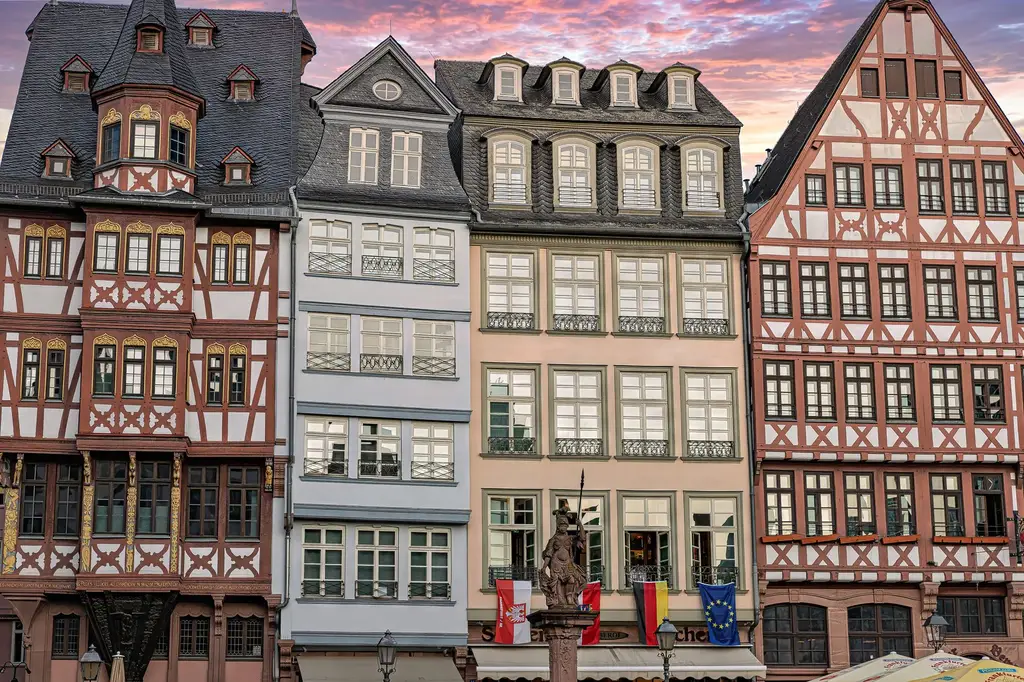
The rebuilt old town around Römerberg is smaller than photos make it look, and knowing it's a reconstruction rather than a surviving medieval quarter changes how you should spend your time there: quickly, then move on.
I would not build a Germany trip around Frankfurt the way you would around Berlin or Munich. It earns its place as the base you sleep in the night before or after a Rhine Valley or Heidelberg day trip, not as a destination that fills a week.
The skyline is the most distinctly un-German thing about the city, and it's genuinely worth seeing from the Main Tower or the cathedral tower rather than only from street level.
Sachsenhausen at night is a better use of an evening here than another round of the financial district's empty-after-6pm streets.
The compact city core: old town, Städel Museum, and a Sachsenhausen dinner.
Day 1: Frankfurt in a day
Morning
Walk Römerberg and the Dom-Römer Quarter, then climb the cathedral tower for a first look at the skyline.
Afternoon
Cross the river to the Städel Museum, give it two to three hours.
Evening
Head into Sachsenhausen for apple wine and a Grüne Sosse dinner.
Tip: Hit the Städel on a Tuesday afternoon if your schedule allows, the discounted slot cuts the ticket price.
Two days in the city, honestly enough to cover it, plus one day trip to Heidelberg.
Day 1: Old town and skyline
Morning
Römerberg and the Dom-Römer Quarter, then the cathedral tower.
Afternoon
Main Tower observation deck, then a walk along the Museumsufer riverbank.
Evening
Dinner in Sachsenhausen.
Tip: The Main Tower and cathedral tower give two different angles on the same skyline, both are worth the climb.
Day 2: Museums
Morning
Städel Museum, the standout collection on the Museumsufer.
Afternoon
One more Museumsufer stop, the Liebieghaus for sculpture or the German Film Museum.
Evening
A quieter dinner in Westend or back in the centre.
Tip: Most Museumsufer museums close Monday, plan around it.
Day 3: Day trip: Heidelberg
Morning
Train to Heidelberg (around 1 hour from Frankfurt Hauptbahnhof), walk the old town and up to Heidelberg Castle.
Afternoon
Continue exploring the castle grounds and the Philosophers' Walk across the river for views back over the town.
Evening
Return to Frankfurt for a final dinner.
Tip: Heidelberg Castle's grounds are free to wander, the interior and funicular have separate paid tickets.
This is honestly a 2-day city stretched into a 5-day regional trip: the city core plus Heidelberg, the Rhine Valley, and Rothenburg ob der Tauber as day trips.
Day 1: Old town and skyline
Morning
Römerberg and the Dom-Römer Quarter, then the cathedral tower.
Afternoon
Main Tower observation deck, Museumsufer riverbank walk.
Evening
Dinner in Sachsenhausen.
Tip: Both towers give different angles on the skyline.
Day 2: Museums
Morning
Städel Museum.
Afternoon
Liebieghaus or German Film Museum.
Evening
Dinner in Westend.
Tip: Most museums close Monday.
Day 3: Day trip: Heidelberg
Morning
Train to Heidelberg, old town and castle.
Afternoon
Philosophers' Walk for the view back over town.
Evening
Return to Frankfurt for dinner.
Tip: Castle grounds are free, interior tickets are separate.
Show all 5 days
Day 4: Day trip: Rhine Valley
Morning
Train to Rüdesheim am Rhein (around 1 hour), walk the vineyard terraces.
Afternoon
A short Rhine river cruise between Rüdesheim and Bacharach, both riverside towns worth a wander.
Evening
Return to Frankfurt.
Tip: Check current train and boat schedules before committing, connections are less frequent than the city routes.
Day 5: Day trip: Rothenburg ob der Tauber
Morning
Train to Rothenburg (around 2.5-3 hours with a connection), walk the medieval walls and old town.
Afternoon
More of the old town, this is one of the best-preserved medieval town centres in Germany.
Evening
Return to Frankfurt for a final night.
Tip: This is a long day by train, an earlier start makes it far less rushed.
A week built regionally around Frankfurt as a base: two city days plus five day trips across the Rhine and central Germany. Frankfurt itself does not honestly fill seven days.
Day 1: Old town and skyline
Morning
Römerberg and the cathedral tower.
Afternoon
Main Tower, Museumsufer walk.
Evening
Dinner in Sachsenhausen.
Tip: Both towers offer different skyline views.
Day 2: Museums
Morning
Städel Museum.
Afternoon
Liebieghaus or the film museum.
Evening
Dinner in Westend.
Tip: Museums close Monday, plan around it.
Day 3: Day trip: Heidelberg
Morning
Train to Heidelberg, old town and castle.
Afternoon
Philosophers' Walk.
Evening
Return to Frankfurt.
Tip: Castle grounds are free to wander.
Show all 7 days
Day 4: Day trip: Rhine Valley
Morning
Train to Rüdesheim, vineyard terraces.
Afternoon
Short Rhine cruise to Bacharach.
Evening
Return to Frankfurt.
Tip: Verify current boat schedules before you go.
Day 5: Day trip: Rothenburg ob der Tauber
Morning
Train to Rothenburg, medieval walls and old town.
Afternoon
More of the old town.
Evening
Return to Frankfurt.
Tip: Start early, it's a long round trip by train.
Day 6: Day trip: Mainz and Wiesbaden
Morning
Short train to Mainz, the cathedral and old town.
Afternoon
Continue to nearby Wiesbaden, a spa town with a different, more genteel feel.
Evening
Return to Frankfurt for dinner.
Tip: Both cities are close enough to combine in one day easily.
Day 7: Day trip: Nuremberg
Morning
Train to Nuremberg (around 2 hours), the old town and castle.
Afternoon
Nuremberg's Christmas market square area and city walls if the season fits, otherwise the Germanisches Nationalmuseum.
Evening
Return to Frankfurt for a final night.
Tip: Nuremberg deserves more than a day trip if you have the time to stay over instead.
Two weeks using Frankfurt purely as an airport and rail base: two city days, then extended stays in Heidelberg, the Rhine Valley, and Nuremberg rather than more Frankfurt day trips. Built regionally, not city-heavy.
Day 1: Old town and skyline
Morning
Römerberg and the cathedral tower.
Afternoon
Main Tower, Museumsufer walk.
Evening
Dinner in Sachsenhausen.
Tip: Both towers offer different skyline views.
Day 2: Museums
Morning
Städel Museum.
Afternoon
Liebieghaus or film museum.
Evening
Dinner in Westend.
Tip: Museums close Monday.
Day 3: Travel to Heidelberg
Morning
Train to Heidelberg, check into a base for two nights.
Afternoon
Old town and Heidelberg Castle grounds.
Evening
Dinner along the Neckar riverfront.
Tip: Staying overnight beats a rushed day trip from Frankfurt.
Show all 14 days
Day 4: Heidelberg at a slower pace
Morning
Philosophers' Walk and the university district.
Afternoon
Castle interior tour if timed tickets are available.
Evening
Free evening.
Tip: Book castle interior tickets ahead in summer.
Day 5: Travel to the Rhine Valley
Morning
Train to Bacharach or Rüdesheim, check into a riverside town for two nights.
Afternoon
Walk the vineyard terraces and town walls.
Evening
A quiet riverside dinner.
Tip: These small towns move at a different pace than the cities, let it.
Day 6: Rhine Valley by boat
Morning
A longer Rhine river cruise past castles and vineyard terraces.
Afternoon
Stop in another riverside town along the route.
Evening
Return to your base town for dinner.
Tip: Verify current cruise schedules and departure points before committing.
Day 7: Rothenburg ob der Tauber
Morning
Train to Rothenburg, medieval walls and old town.
Afternoon
Full afternoon in the old town, this one rewards a slower pace.
Evening
Consider staying overnight here rather than rushing back.
Tip: Rothenburg is genuinely worth an overnight rather than a day trip if your schedule allows.
Day 8: Travel to Nuremberg
Morning
Train to Nuremberg, check into a base for three nights.
Afternoon
Old town and Nuremberg Castle.
Evening
Dinner in the old town.
Tip: Nuremberg is a full city, not a day-trip footnote, give it real time.
Day 9: Nuremberg's history
Morning
Documentation Centre Nazi Party Rally Grounds, a serious and well-curated exhibition on the city's Nazi-era history.
Afternoon
Germanisches Nationalmuseum.
Evening
Free evening.
Tip: The Rally Grounds site is a heavy but important half day.
Day 10: Nuremberg at a slower pace
Morning
Albrecht Dürer's House and the artisan quarter.
Afternoon
City walls walk and the old town's smaller museums.
Evening
A final Nuremberg dinner.
Tip: This city rewards wandering more than a checklist.
Day 11: Travel to Mainz and Wiesbaden
Morning
Train back toward Frankfurt with a stop in Mainz, the cathedral and old town.
Afternoon
Continue to Wiesbaden for the afternoon.
Evening
Return to Frankfurt.
Tip: Both towns are easy half-day stops on the way back.
Day 12: Free day, Frankfurt or a last day trip
Morning
Revisit anything missed in Frankfurt, or a day trip to Mannheim or Darmstadt.
Afternoon
Flexible.
Evening
Dinner in Sachsenhausen.
Tip: Use this as a buffer day for anything delayed earlier.
Day 13: Last full day
Morning
A final museum or riverside walk.
Afternoon
Shopping or packing.
Evening
A final Frankfurt dinner.
Tip: Keep this day light before travel.
Day 14: Departure
Morning
Depending on flight time, a final walk through Römerberg.
Afternoon
Head to the airport, it's a short S-Bahn ride from the centre.
Evening
Departure.
Tip: Give yourself more airport buffer than usual, Frankfurt Airport is large and can be slow at security during peak travel times.
Things to do
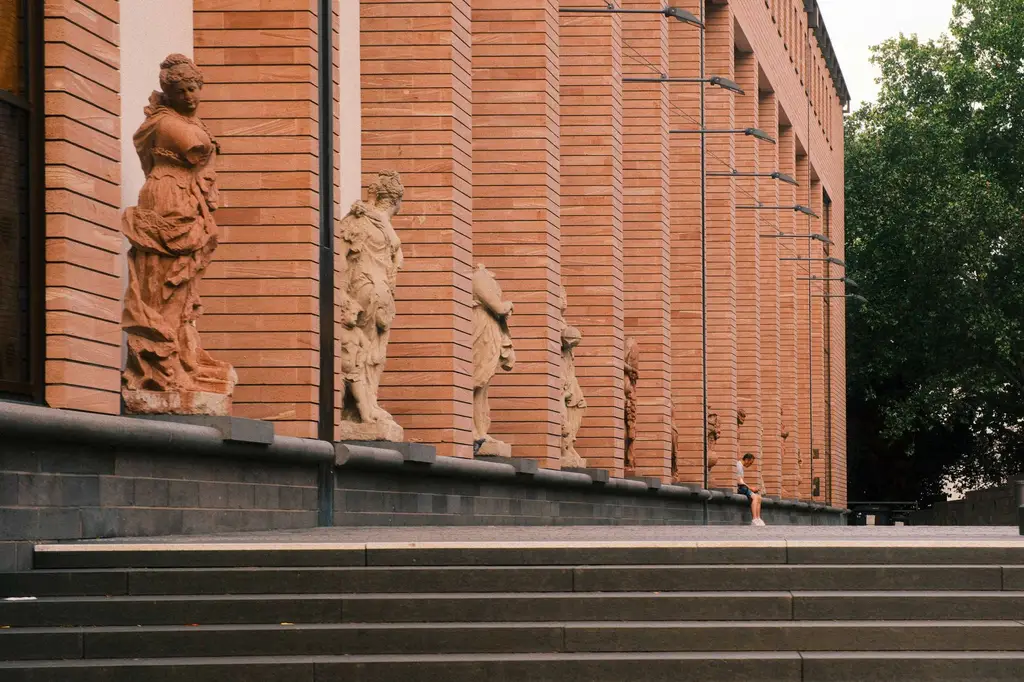
1Photo by Arlind D on PexelsRömerberg and the Dom-Römer Quarter
The medieval-looking old town square was rebuilt after wartime destruction, most of what you're seeing is reconstruction rather than surviving original architecture. Still worth the hour.
2
Städel Museum
Tue, Wed, Fri, Sat, Sun 10:00-18:00; Thursday 10:00-21:00·EUR 19 standard adult; EUR 10 Tuesday special 15:00-18:00; children under 12 free·2-3 hours
Closed Mondaywalk in, timed tickets not required
One of Germany's strongest art collections, spanning medieval to contemporary. The Thursday evening extended hours are a good way to avoid daytime crowds.
generally 9:00-20:00, shorter in winter, closed during services·free (tower climb has a separate small fee, verify current amount before you go)·30-45 minutes
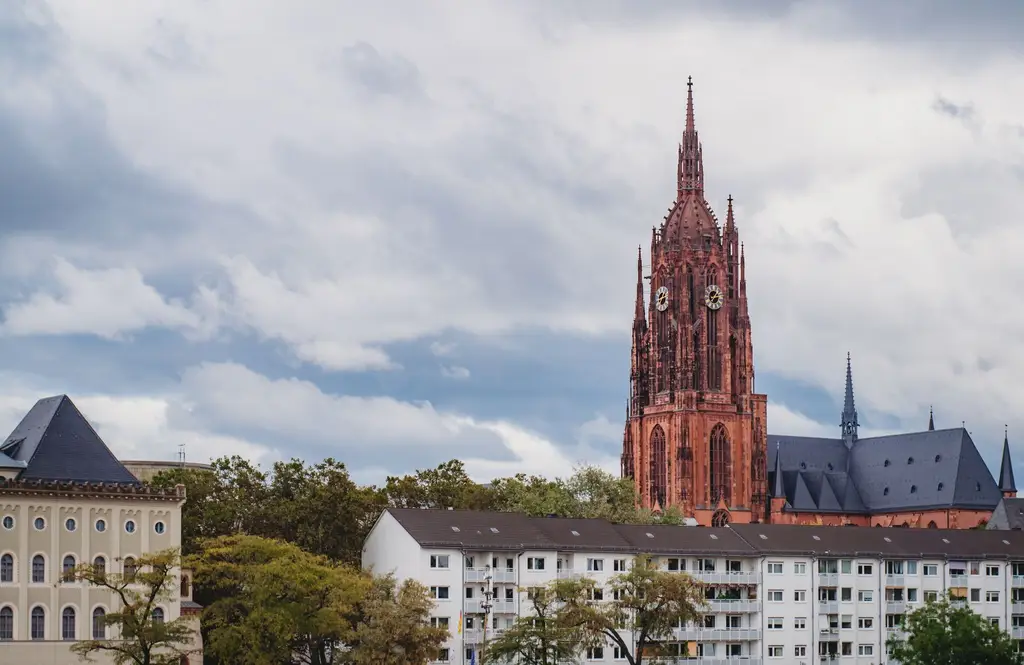
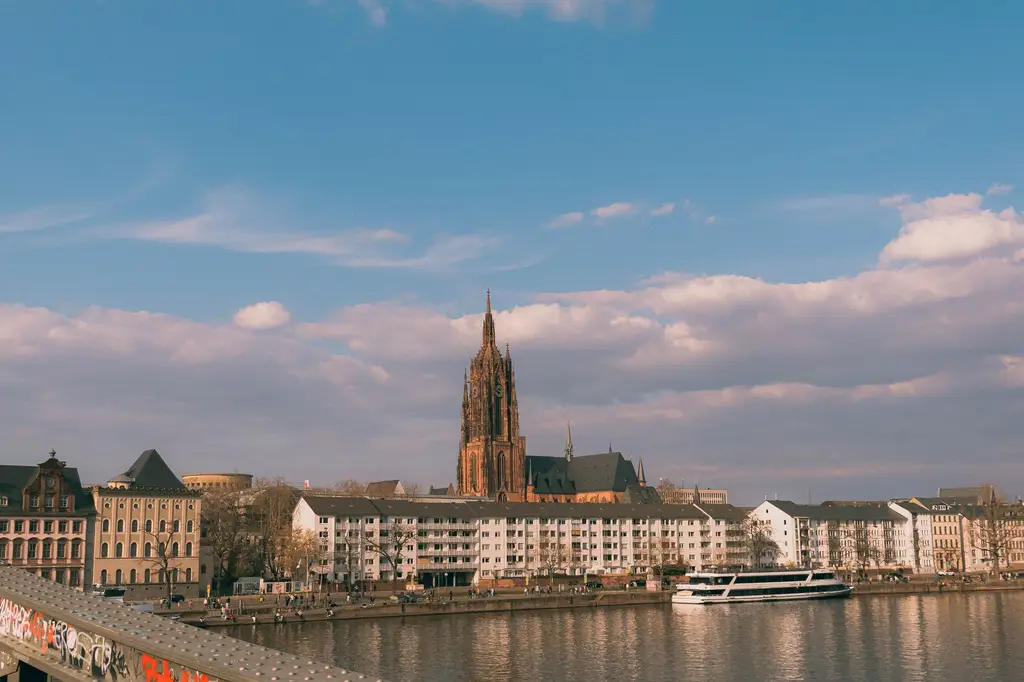
Modest compared to Cologne's cathedral, but its tower is one of the few spots to see the old town and the skyscraper skyline in the same frame.
4
Museumsufer (Museum Embankment)
varies by individual museum, most closed Monday·varies by museum, several offer combined discount tickets·half day for two to three museums
Closed Monday (most museums along the strip)walk in for most, check individual sites for special exhibitions
A cluster of museums along the south bank of the Main, the Städel is the standout but the Liebieghaus sculpture collection and German Film Museum are worth a stop if you have the afternoon.
5
Main Tower observation deck
generally 10:00-21:00 (later Fri-Sat), hours shift seasonally, verify current times before going·around EUR 9-10, verify current price·45 minutes
One of the few skyscrapers in the financial district with public rooftop access. The view over Mainhattan is the reason to go up, not the exhibits inside.
6
Sachsenhausen apple wine district
varies by venue, evenings are when it's actually alive·free to walk, a glass of apple wine (Ebbelwoi) runs a few euros·an evening
Frankfurt's answer to a beer garden district, but with apple wine instead. Go for dinner and stay for a drink rather than treating it as a sightseeing stop.
Alt-Sachsenhausen apple wine district
as of 2026-09
Viral
Old-town district south of the Main built around apple wine, known locally as Ebbelwei or Äppler, served from a grey-blue ceramic Bembel jug into ridged glasses called Gerippte. A genuine local tradition rather than a tourist invention, though a few taverns closest to the main strip lean into the tourist crowd. Worth doing once regardless.
Museumsufer (Museum Embankment)
as of 2026-09
Viral
A cluster of museums along the Main riverbank including the Städel art museum, with a collection spanning seven centuries, and the Senckenberg Natural History Museum with fossils and dinosaur skeletons. An established, reliably good cluster rather than a trendy pick, and noticeably less crowded than equivalent museum districts in bigger European cities.
Main Tower viewing platform
as of 2026-09
Viral
An open-air observation deck on the 56th floor of a central skyscraper, giving a panoramic view of Frankfurt's skyline, unusual for a German city, and the Main river below. A legitimately good view for the price. It occasionally closes for private events, so check opening status for the day before planning around it.
Palmengarten botanical garden
as of 2026-09
Viral
One of Germany's largest botanical gardens, opened in 1871, with more than 13,000 plant species arranged by geographic origin. A calm break from the financial-district skyline. Also runs a winter lights display in the cold months, though that's outside a September visit window.
Frankfurt Christmas Market
as of 2026-09
Viral
An annual market spread across Römerberg, Paulsplatz, the Mainkai riverbank, Hauptwache, Friedrich-Stoltze-Platz and Roßmarkt, with over 200 stalls and more than 3 million visitors a year, running November 23 to December 22, 2026. One of Germany's oldest and largest Christmas markets, a real recurring fixture and not a pop-up, but it will not be running for a September visit. Included as a heads-up for anyone planning a return trip later in the year.
Jewish Museum Frankfurt
as of 2026-09
Viral
A museum on the riverbank covering centuries of Jewish history in the city, with exhibitions drawing on Frankfurt's long-standing Jewish community. A solid, substantive stop if you want more than architecture and shopping streets, less known to casual tourists than the Städel.
Where to stay
Altstadt / Römerberg
Suits: first-time visitors who want the reconstructed old town on foot
Central and walkable to the main sights, though smaller and quieter than you might expect for a city this size.
Westend
Suits: a quieter, more residential base near the fairgrounds
Leafy streets, close to Messe Frankfurt if you're here for a trade fair.
Sachsenhausen
Suits: food and apple wine culture, across the river from the centre
A short walk or tram ride to the centre, with a distinct neighbourhood feel and cheaper eating options.
Getting there and around
Getting there
Frankfurt Airport (FRA) is one of Europe's busiest hubs, connected to the city centre by S-Bahn (S8/S9) in about 12 minutes for roughly EUR 5.35, or a taxi for EUR 30-40. The airport's long-distance train station also puts most of Germany within a few hours by ICE, which is a large part of why Frankfurt works well as a base.
Getting around
The compact city centre is walkable, with the Römerberg, Main riverbanks, and skyline all within 20-30 minutes on foot of each other. The RMV network of U-Bahn, S-Bahn, trams, and buses covers the wider metro area if you're staying further out. A single ticket costs around EUR 3, a day ticket around EUR 7. The Deutschlandticket also covers all of it.
Map
City
Recommended (numbered)
Mentioned in an itinerary
Locations on this map
Frankfurt50.11, 8.68
Römerberg and the Dom-Römer Quarter50.11, 8.68
Städel Museum50.10, 8.67
Frankfurt Cathedral (Kaiserdom St. Bartholomäus)50.11, 8.69
Museumsufer (Museum Embankment)50.10, 8.68
Main Tower observation deck50.14, 8.60
Sachsenhausen apple wine district50.10, 8.68
Sosse50.10, 8.70
Liebieghaus50.10, 8.67
Westend50.12, 8.66
Heidelberg49.41, 8.69
Frankfurt Hauptbahnhof50.11, 8.66
Heidelberg Castle49.41, 8.72
Rhine Valley50.16, 7.73
Rhein50.11, 8.66
Rhine50.47, 7.35
Bacharach50.06, 7.77
Rothenburg49.38, 10.18
Tauber49.49, 9.90
Mainz50.10, 8.54
Wiesbaden50.08, 8.24
Nuremberg49.45, 11.08
Germanisches Nationalmuseum49.45, 11.08
Neckar50.10, 8.65
Mannheim49.49, 8.47
Darmstadt50.10, 8.66
S-Bahn50.08, 8.67
What it costs
Stay
Food
Transport
Activities
Daily cost breakdown, EUR per person
Tier
Stay
Food
Transport
Activities
Total
Budget
EUR 30
EUR 20
EUR 5
EUR 15
EUR 70
Mid-range
EUR 90
EUR 40
EUR 10
EUR 25
EUR 165
Splurge
EUR 190
EUR 70
EUR 20
EUR 40
EUR 320
An RMV day ticket (around EUR 7) covers transit. A bakery lunch (EUR 6-8), Städel Museum entry (EUR 19, or EUR 10 on the Tuesday special), and a Sachsenhausen dinner with apple wine (EUR 20-30) puts a mid-range day around EUR 130-150 per person including a mid-range hotel room split two ways.
Money savers
Time the Städel Museum for the Tuesday 3-6pm discount slot if your schedule allows, it roughly halves the ticket price.
Check Frankfurt's trade fair calendar before booking, hotel prices during major fairs can run well above normal rates, and shifting your dates by even a few days can save significantly.
The RMV day ticket pays off fast if you're moving between the airport, centre, and Sachsenhausen more than twice in a day.
Frankfurt is Germany's finance capital and its restaurant scene is more cosmopolitan than the traditional Sachsenhausen taverns suggest, but the old-school apple wine culture is still the thing to seek out. Ebbelwoi, a tart, still cider poured from a distinctive dimpled jug called a Bembel, anchors the Sachsenhausen district's taverns, where locals mix it with sparkling water to taste. The food that goes with it is plain and vinegary rather than rich: green herb sauce, boiled beef, pickled cheese. Outside that scene, Frankfurt's large finance and international community supports a genuinely good range of global food, better than its size would suggest. Sunday closures are real in the old town's traditional taverns, though the apple wine houses in Sachsenhausen tend to stay open.
EUR 2-4 a glass·Sachsenhausen district taverns, poured from a Bembel jug
Must try
A tart, still cider that is Frankfurt's answer to beer, traditionally mixed with sparkling water. Ask for it gespritzt if you want it diluted, pur if you do not.
Frankfurter Grüne Sosse
EUR 10-14·traditional Gasthaus restaurants across the city
Must try
A cold sauce of seven fresh herbs, sour cream and boiled egg, served over boiled potatoes and beef. Goethe reportedly loved it; it remains a genuine local staple rather than a marketing line.
Handkäse mit Musik
EUR 6-8·Sachsenhausen taverns
A pungent, translucent cheese marinated in vinegar, oil and onions, served with dark bread. The name, cheese with music, refers to the digestive aftermath; order it if you are curious rather than squeamish.
Frankfurter sausage
EUR 4-6·butchers and traditional restaurants citywide
The original, legally defined Frankfurter, a thin pork sausage boiled rather than grilled, distinct from the American hot dog it inspired. Order it with mustard and bread, not a bun.
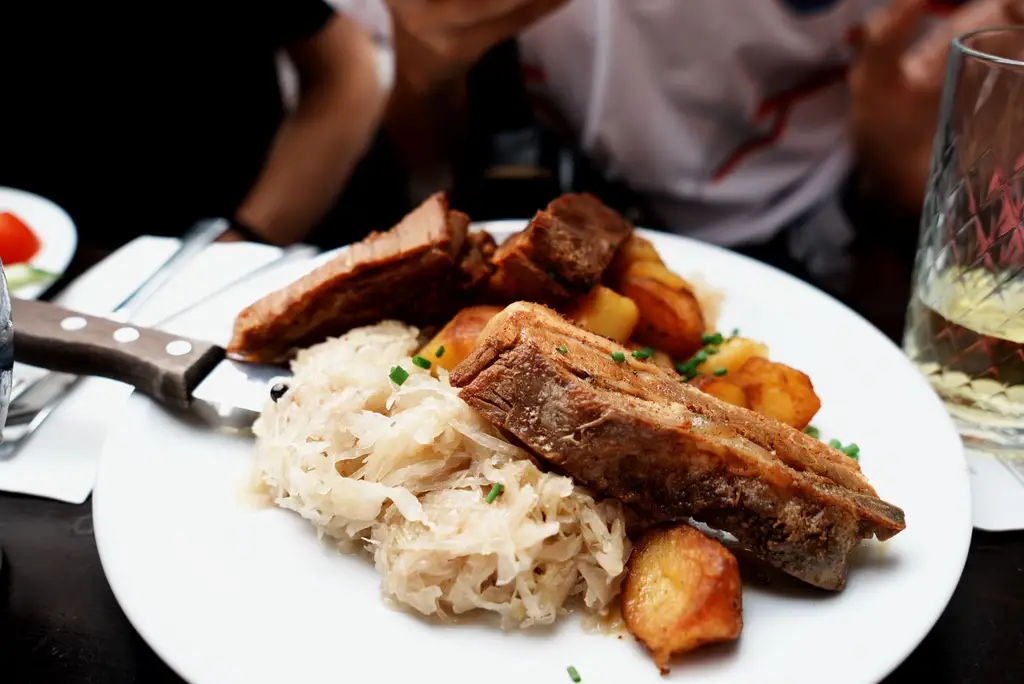
Rippchen mit Kraut
EUR 13-17·Sachsenhausen apple wine taverns
Cured pork ribs served with sauerkraut, a heartier counterpart to the vinegary Grune Sosse dishes that dominate the same apple wine tavern menus across Sachsenhausen.
Kleinmarkthalle stalls
EUR 5-12 per item·Kleinmarkthalle, central Frankfurt
A covered market hall with butchers, cheesemongers and small international food stalls, good for a fast lunch between meetings in the city's finance district.
Ioki Fu
as of 2026-09
Viral
Halal ramen, wok and matcha spot in the city center, self service, described as Frankfurt's only dedicated halal ramen restaurant. Solid, not just hype. A real differentiator if you want ramen and care about halal, less essential otherwise.
Bahnhofsviertel
as of 2026-09
Viral
Frankfurt's station district, now a mixed food neighborhood: Middle Eastern, Israeli, Indian, Eritrean, alongside old German taverns, cheaper than the tourist core. More durable than any single shop. Built up over years, not a one season spike.
Daisy
as of 2026-09
Viral
Low waste vegetarian and vegan fine dining in a former pharmacy, capped at 25 guests, open since early 2026. The best reviewed Frankfurt opening of the year and a sustainability pitch the FAZ took seriously. Small room, so book well ahead.
Eighty Nine
as of 2026-09
Viral
Levantine restaurant inside the Kennedy 89 hotel in Sachsenhausen, opened spring 2026 alongside a rooftop bar. Hotel restaurants are usually forgettable. This one got covered on its cooking rather than its view, which is a good sign.
JWD handpulled noodles
as of 2026-09
Viral
First German branch of a hand pulled noodle soup shop, opened February 2026 and hyped before it served a bowl. Coverage has thinned since the opening rush, so treat the buzz with some caution. The noodles are the draw and the room is not.
Yugen Omakase
as of 2026-09
Viral
Sushi counter that opened June 2026 serving a 25 course omakase with no printed menu, chef decides everything. Frankfurt didn't have a proper omakase counter before this. Expect a long sitting and no ability to skip courses you dislike.
Safety and scams
Frankfurt is safe by any reasonable standard, with the area around the Hauptbahnhof (main train station) at night being the one spot with a visible open drug scene worth being alert around, though it's more unpleasant than dangerous for a passer-through. Business travellers and tourists mix easily and the city is well policed and well lit centrally.
Common mistakes
Treating Frankfurt as a bucket-list destination and being disappointed rather than treating it honestly as a transit hub with a couple of strong sights.
Booking a hotel without checking the trade fair calendar first and paying a premium without realizing why.
Skipping the Städel Museum because 'it's just Frankfurt', it's one of the better collections in the country.
Not using Frankfurt's rail connections to see more of the Rhine Valley or Heidelberg, which is the city's real strength for a longer stay.
Frequently asked questions
Is Frankfurt worth visiting?
For a day or two, yes. The Städel Museum, the reconstructed old town, and the skyline are genuinely worth seeing. It's not a week-long destination on its own, and honest planning treats it as a base for day trips rather than a bucket-list city.
How many days do you need in Frankfurt?
One full day covers the essentials. Two lets you add a second museum and a slower pace. Beyond that, build day trips to Heidelberg, the Rhine Valley, or Rothenburg ob der Tauber into the itinerary rather than staying in the city.
Is Frankfurt just an airport city?
Mostly, for international travellers, and that reputation is fair. But it has a real, if compact, tourist core: the Städel Museum, the rebuilt Römerberg old town, and a skyline unlike anywhere else in Germany.
How do you get from Frankfurt Airport to the city centre?
The S-Bahn (S8 or S9 lines) runs from the airport to the city centre in about 12 minutes, for roughly EUR 5.35 on a standard RMV ticket. A taxi runs EUR 30-40 depending on traffic and time of day.
Is Frankfurt expensive?
Moderate by German standards, though hotel prices spike hard during the city's frequent trade fairs, especially the Buchmesse book fair in October. Checking the trade fair calendar before booking can save a meaningful amount.
What is Frankfurt known for?
Banking and finance, mainly, as home to the European Central Bank and Germany's stock exchange. It's also known for its skyline of skyscrapers, unusual for a German city, and as Europe's busiest Lufthansa hub.
Is the Frankfurt Card worth it?
It covers public transit and offers museum discounts, though exact current pricing should be checked on the official Frankfurt tourism site before you buy, since this changes. If you're only doing a day or two and one or two paid sights, compare it against a standard day transit ticket first.
What is there to do in Frankfurt besides business?
The Städel Museum, the reconstructed Römerberg old town square, the cathedral and Main Tower for skyline views, and the Sachsenhausen apple wine district for an evening out. It is a real, if modest, tourist itinerary.