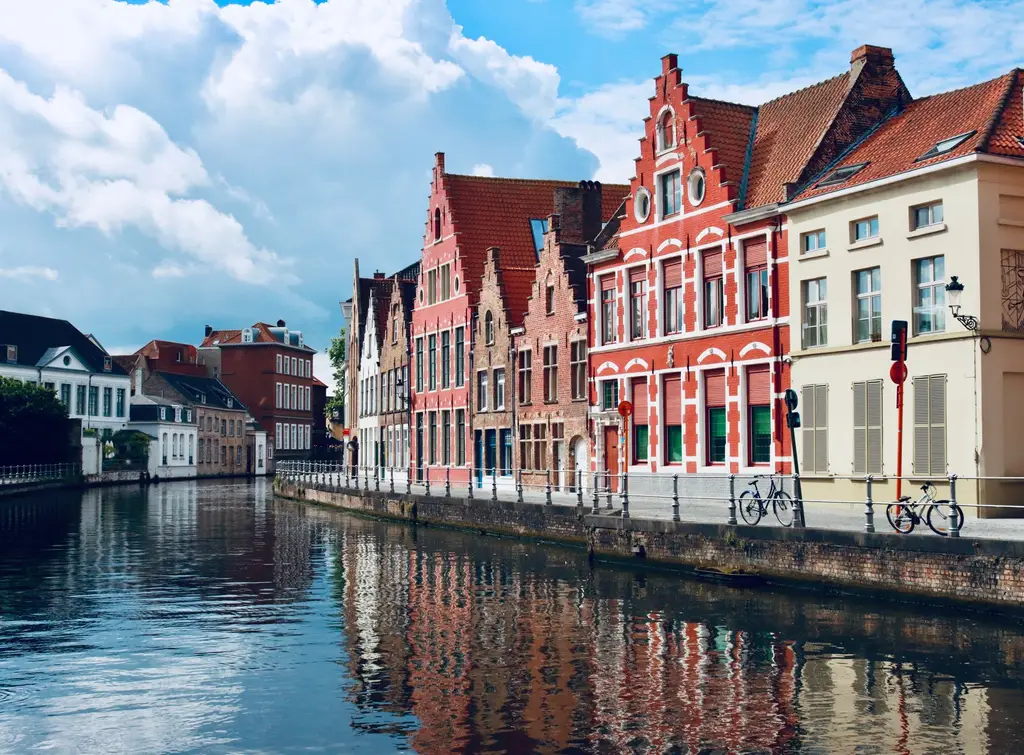
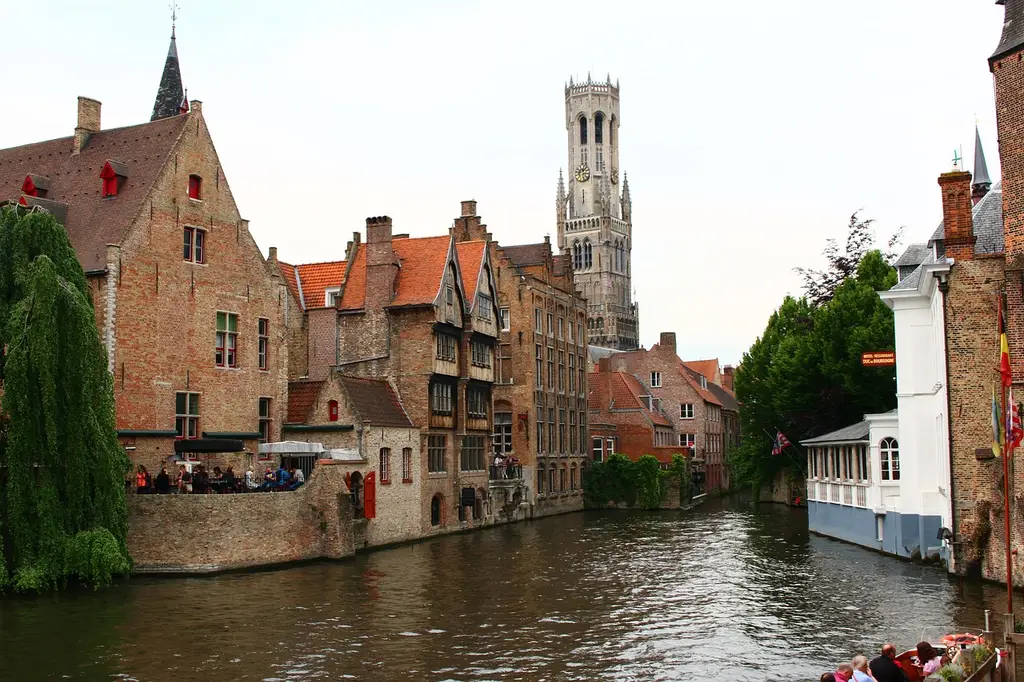
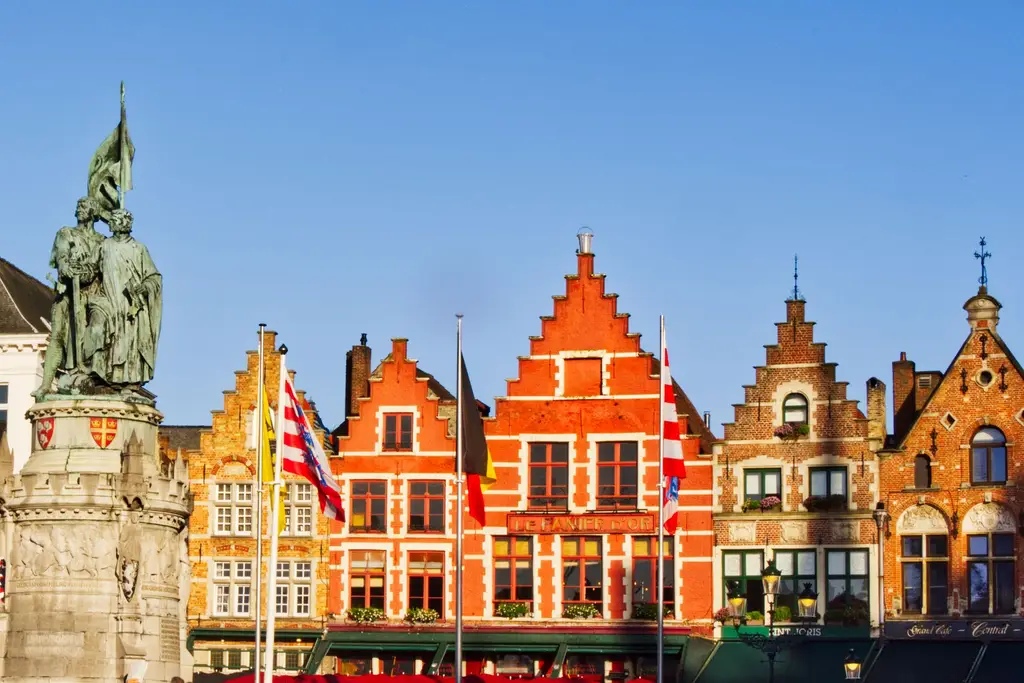
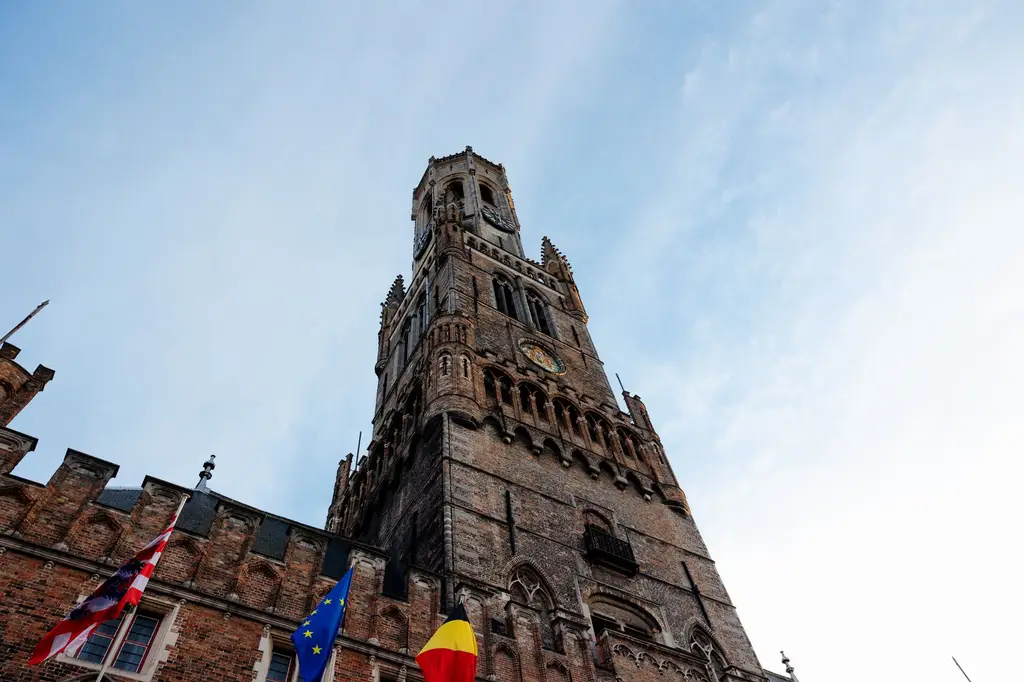
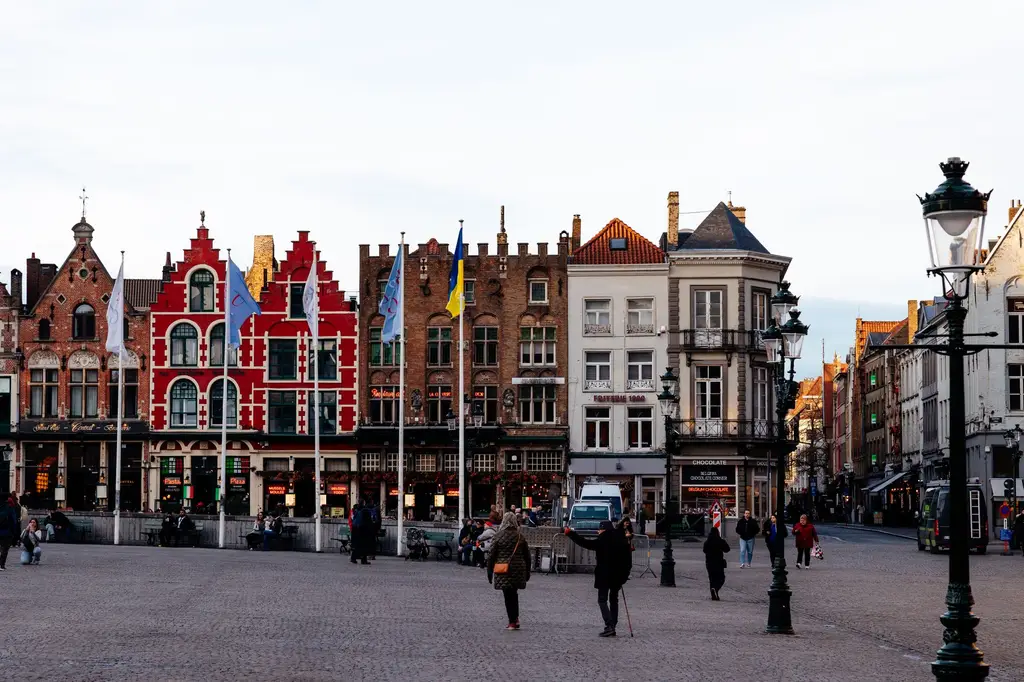
Bruges is the Belgium most people picture before they've been anywhere in the country: canals, stepped gables, a Markt square dominated by a 13th-century belfry, and a historic centre small enough to walk end to end in under an hour. It earned that reputation honestly, the medieval street plan survived largely intact because Bruges' trading wealth collapsed in the 15th and 16th centuries and the city simply stopped rebuilding, and a careful 1960s restoration protected what was left. UNESCO recognises three separate things here: the historic centre, the belfry (as part of a wider Belgian and French belfry listing), and the beguinage, a walled community of lay religious women whose houses still ring a quiet courtyard. The problem is that everyone else has the same picture in their head, roughly eight million visitors a year come through a town of about 118,000 residents, and a large share arrive on day-trip coaches from Brussels, Paris, and Amsterdam. From roughly mid-morning to late afternoon the Markt, Burg square, and the main canal routes fill up in a way that changes the character of the place. Before 9am, and again once the coaches pull out in the early evening, the same streets are close to empty and the town looks the way the postcards promise. Staying overnight rather than day-tripping is what actually earns Bruges its reputation.
What I actually think
Bruges before 9am is a different town. The same streets that feel like a theme park queue by 11am are close to silent at dawn, and it's the single best piece of practical advice I can give anyone going.
The belfry climb is more of a workout than photos suggest. 366 steps with nowhere to stop and rest properly, and the staircase narrows near the top where two-way traffic gets awkward.
I'd rank the Beguinage above most of the museums for a quiet break. It's one of very few spots in the centre where the coach groups genuinely thin out, even at midday.
The canal boat tours are all roughly the same experience regardless of which jetty you pick, so I wouldn't overthink choosing one. Do it once for the different sightlines, then don't feel you need a second.
Day-tripping from Brussels is a completely different experience from staying overnight, not just a shorter one. If you can only do one, staying at least one night is worth more than an extra day added anywhere else in Belgium.
An early start at the Markt and belfry ahead of the coach crowds, then the core sights before the afternoon crush peaks.
Day 1: Bruges before the coaches arrive
Morning
Markt and belfry climb by 9am, then the Basilica of the Holy Blood before the queue forms.
Afternoon
Groeninge Museum and a canal boat tour, both now busier with day-trippers.
Evening
A Flemish stew dinner and a beer somewhere quiet as the coach crowds thin out.
Tip: If you're day-tripping, arrive on the earliest reasonable train, the difference between 9am and 11am Bruges is dramatic.
The historic centre at an unhurried pace with real early mornings and late afternoons, honestly enough for a town this size.
Day 1: The Markt and belfry side
Morning
Belfry climb and Markt square at opening, ahead of the crowds.
Afternoon
Basilica of the Holy Blood and Burg square.
Evening
Dinner in the centre, quieter once the coaches leave.
Tip: Book the belfry time slot the night before if the system allows it.
Day 2: Museums and the Beguinage
Morning
Groeninge Museum.
Afternoon
Church of Our Lady, then the Beguinage and Minnewater.
Evening
A canal-side walk at dusk when the lit facades reflect on the water.
Tip: The Beguinage stays calm even when the rest of the centre is packed.
Day 3: Canals and a slower finish
Morning
Canal boat tour, then a wander through the quieter Sint-Anna district.
Afternoon
Free time for chocolate shops or a windmill walk along the old city walls.
Evening
A final dinner away from the Markt.
Tip: Sint-Anna shows a residential side of Bruges most day-trippers never see.
The 2-3 day Bruges core plus day trips to Ghent and Brussels, since the town itself doesn't stretch further without padding.
Day 1: The Markt and belfry side
Morning
Belfry and Markt at opening.
Afternoon
Basilica of the Holy Blood, Burg square.
Evening
Dinner in the centre.
Tip: Early starts are the whole strategy in Bruges.
Day 2: Museums and the Beguinage
Morning
Groeninge Museum.
Afternoon
Church of Our Lady, Beguinage, Minnewater.
Evening
Canal-side walk at dusk.
Tip: Save the Beguinage for a midday break from crowds elsewhere.
Day 3: Canals and a slower finish
Morning
Canal boat tour.
Afternoon
Sint-Anna district, windmills, chocolate shops.
Evening
Final centre dinner.
Tip: This is a good day to slow down deliberately.
Show all 5 days
Day 4: Day trip: Ghent
Morning
Train to Ghent (around 25 minutes), Gravensteen castle.
Afternoon
Graslei waterfront and Saint Bavo's Cathedral for the Ghent Altarpiece.
Evening
Return to Bruges for dinner.
Tip: Ghent has a fraction of Bruges' tour-group crowds, a useful contrast.
Day 5: Day trip: Brussels
Morning
Train to Brussels (around 1 hour), Grand Place and Manneken Pis.
Afternoon
A museum of your choice or the comic strip walking trail.
Evening
Return to Bruges for a last dinner.
Tip: Brussels rewards a specific plan more than aimless wandering, pick one or two sights and build around them.
A week built regionally: the Bruges core plus day trips to Ghent, Brussels, Antwerp, and the Flanders Fields sites near Ypres, since Bruges alone does not fill seven days.
Day 1: The Markt and belfry side
Morning
Belfry and Markt at opening.
Afternoon
Basilica of the Holy Blood, Burg square.
Evening
Dinner in the centre.
Tip: Early starts are the whole strategy here.
Day 2: Museums and the Beguinage
Morning
Groeninge Museum.
Afternoon
Church of Our Lady, Beguinage, Minnewater.
Evening
Canal-side walk at dusk.
Tip: Save the Beguinage for a midday break.
Day 3: Canals and a slower finish
Morning
Canal boat tour.
Afternoon
Sint-Anna district, windmills, chocolate shops.
Evening
Final centre dinner before day trips start.
Tip: A deliberately slow day.
Show all 7 days
Day 4: Day trip: Ghent
Morning
Train to Ghent, Gravensteen castle.
Afternoon
Graslei waterfront, Saint Bavo's Cathedral.
Evening
Return to Bruges.
Tip: A useful contrast to Bruges' crowds.
Day 5: Day trip: Brussels
Morning
Train to Brussels, Grand Place and Manneken Pis.
Afternoon
A museum or the comic strip trail.
Evening
Return to Bruges.
Tip: Pick one or two anchors rather than trying to see everything.
Day 6: Day trip: Antwerp
Morning
Train to Antwerp (around 1 hour 20 minutes, one change), Cathedral of Our Lady and Rubens House.
Afternoon
Grote Markt and the MAS museum.
Evening
Return to Bruges.
Tip: Antwerp is the least quaint and most lived-in of the four cities, a good change of pace.
Day 7: Day trip: Ypres and Flanders Fields
Morning
Train and short bus/taxi connection to Ypres, In Flanders Fields Museum.
Afternoon
Menin Gate and nearby First World War cemeteries.
Evening
Return to Bruges for a final dinner.
Tip: This is a heavier, quieter day than the others, plan for it emotionally as well as logistically.
Two weeks using Bruges as one base among several across Belgium, since packing fourteen days into Bruges alone would mean padding a town this compact.
Day 1: The Markt and belfry side
Morning
Belfry and Markt at opening.
Afternoon
Basilica of the Holy Blood, Burg square.
Evening
Dinner in the centre.
Tip: Early starts are the whole strategy here.
Day 2: Museums and the Beguinage
Morning
Groeninge Museum.
Afternoon
Church of Our Lady, Beguinage, Minnewater.
Evening
Canal-side walk at dusk.
Tip: Save the Beguinage for a midday break.
Day 3: Canals and the quieter districts
Morning
Canal boat tour.
Afternoon
Sint-Anna district, windmills.
Evening
Free evening in Bruges.
Tip: A deliberately slow day before day trips start.
Show all 14 days
Day 4: Day trip: Ghent
Morning
Train to Ghent, Gravensteen castle.
Afternoon
Graslei waterfront, Saint Bavo's Cathedral.
Evening
Return to Bruges.
Tip: A useful, less crowded contrast.
Day 5: Travel to Brussels, check in for three nights
Morning
Train to Brussels, settle into a central base.
Afternoon
Grand Place, Manneken Pis, Galeries Royales Saint-Hubert.
Evening
A beer cafe evening in the centre.
Tip: Brussels is the better hub for this stretch of the trip, being the rail centre of the country.
Day 6: Brussels museums
Morning
Royal Museums of Fine Arts or the Magritte Museum.
Afternoon
The EU quarter briefly, or the comic strip walking trail.
Evening
Free evening.
Tip: Pick one major museum rather than rushing several.
Day 7: Day trip: Antwerp from Brussels
Morning
Train to Antwerp (around 45 minutes from Brussels), Cathedral of Our Lady.
Afternoon
Rubens House and Grote Markt.
Evening
Return to Brussels.
Tip: Antwerp is closer to Brussels than to Bruges, worth basing this leg from Brussels.
Day 8: Day trip: Ypres and Flanders Fields
Morning
Train from Brussels toward Ypres, In Flanders Fields Museum.
Afternoon
Menin Gate and nearby war cemeteries.
Evening
Return to Brussels.
Tip: A heavier day, worth pacing the rest of the trip around it.
Day 9: Travel back toward Bruges via Ghent, check in for two nights
Morning
Train to Ghent, drop bags, Gravensteen if not already seen thoroughly.
Afternoon
Free time in Ghent's centre.
Evening
Dinner in Ghent, generally more local than a Bruges centre evening.
Tip: Splitting the second week between Ghent and Bruges avoids repeating the same base for fourteen straight days.
Day 10: Ghent at a slower pace
Morning
Saint Bavo's Cathedral for the Ghent Altarpiece.
Afternoon
Design Museum Gent or STAM city museum.
Evening
Free evening in Ghent.
Tip: Ghent rewards wandering more than a tight schedule does.
Day 11: Travel to Bruges, check in for final days
Morning
Train to Bruges (around 25 minutes from Ghent).
Afternoon
Free afternoon, revisit anything missed from the first Bruges days.
Evening
A relaxed dinner.
Tip: This gives Bruges a second look with none of the arrival logistics of day one.
Day 12: Free day in Bruges
Morning
A slow morning, coffee at the Markt before it fills.
Afternoon
Chocolate shops, a second canal walk, or a windmill walk along the old walls.
Evening
Free evening.
Tip: Use this as a genuine buffer day, weather and energy vary this deep into a trip.
Day 13: Last full day
Morning
Anything missed from the earlier Bruges days.
Afternoon
Souvenir shopping, a final museum visit.
Evening
A last dinner in the centre once the day-trip crowds have gone.
Tip: Keep this day light before travel.
Day 14: Departure
Morning
Pack and any final errands.
Afternoon
Train to Brussels Airport (around 1 hour 10 minutes with a change) or onward travel.
Evening
Departure.
Tip: Build in more buffer than the train time suggests, Bruges station to the airport involves a change at Brussels-Zuid.
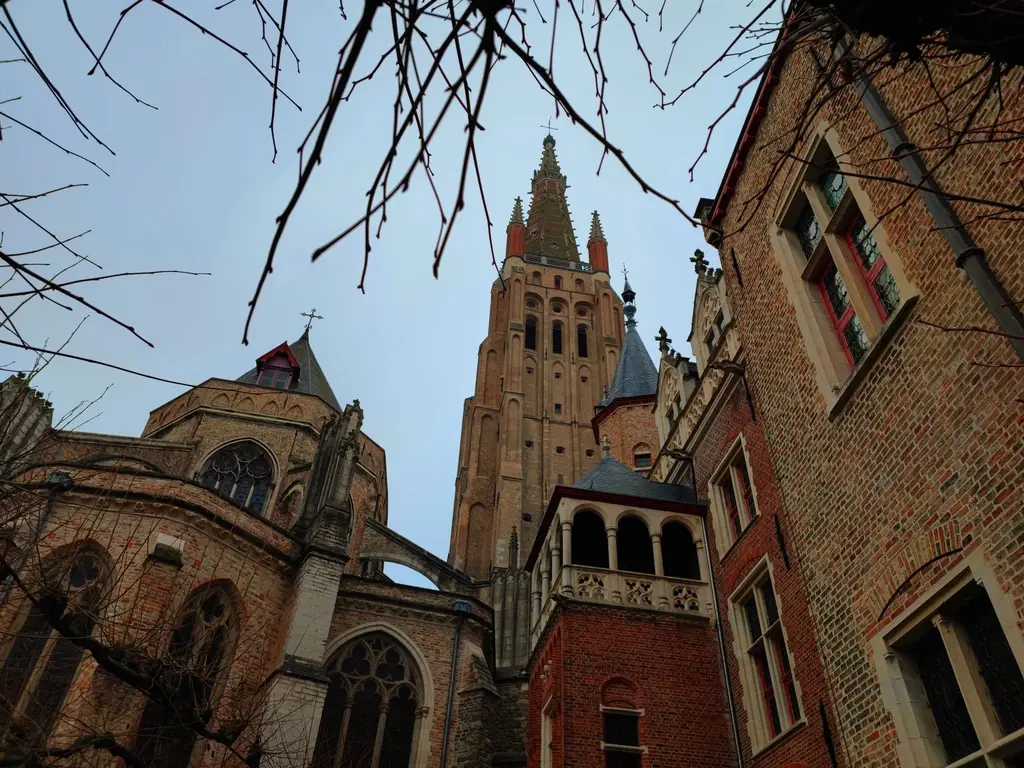
6Photo by Manon Segur on PexelsChurch of Our Lady (Onze-Lieve-Vrouwekerk)
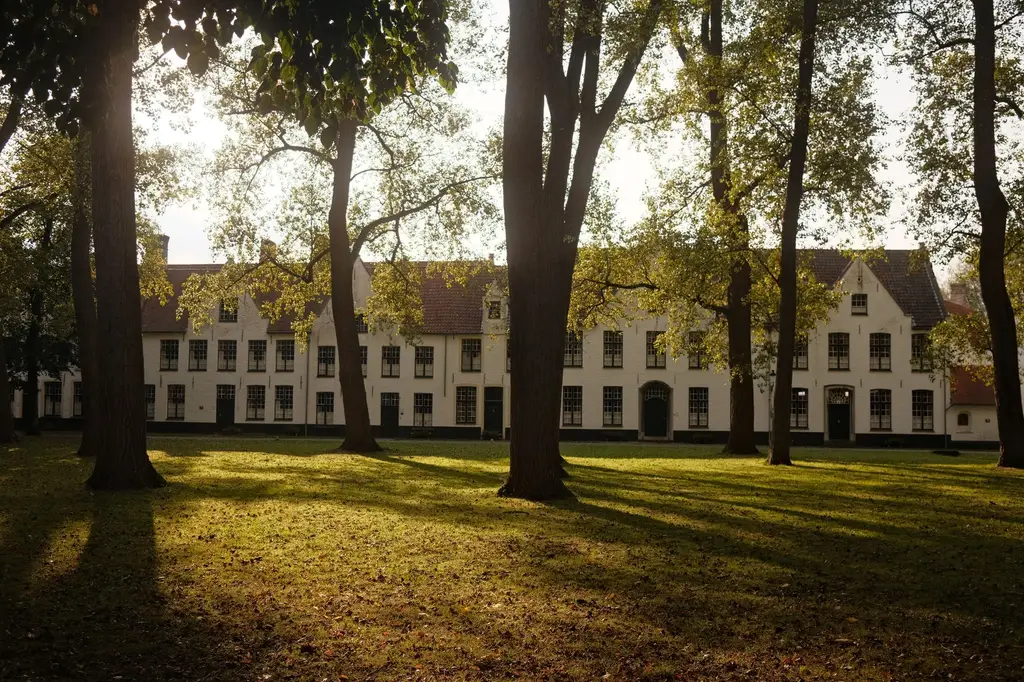
7Photo by J MAD on PexelsBeguinage (Begijnhof) and Minnewater
1
Belfry of Bruges (Belfort)
check before you go, hours vary and time-slot reservations are strongly encouraged·check before you go, part of the Musea Brugge network's paid ticketing·45 minutes-1 hour
time-slot reservation strongly encouraged, book ahead in peak season
366 steps with no elevator to a narrow viewing gallery over the Markt. Physical exertion is real; the view over the whole historic centre is the reward.
always open (outdoor)·free·30-45 minutes, longer with a coffee stop
The belfry, gabled guild houses, and horse-drawn carriage stands all sit here. Come before 9am to see it without the crowds and coach groups.
3
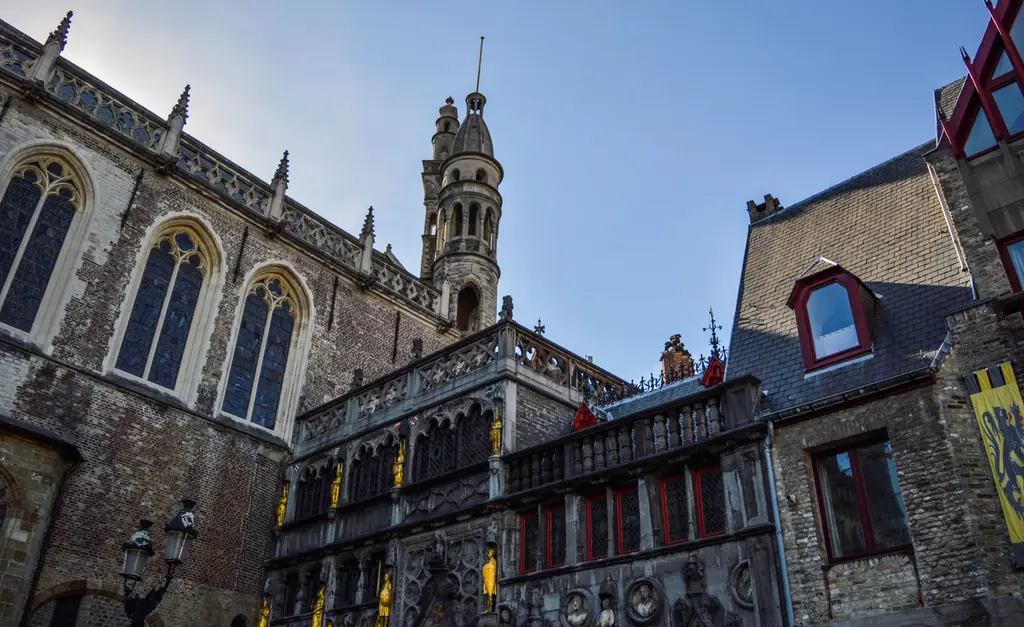
Basilica of the Holy Blood
daily 10:00-17:15·Basilica itself free; museum and treasury EUR 5, children under 12 free·20-30 minutes for the chapel, 45 minutes with the museum
Closed annual closure roughly mid-January for maintenance, exact dates change yearly, verify before visiting in that window
A relic said to be Christ's blood is kept here and shown to the public on Fridays; the Romanesque lower chapel and Gothic upper chapel are worth the short visit even outside that.
check before you go, part of the Musea Brugge network·check before you go·1.5-2 hours
walk in, though a time slot avoids queueing in peak season
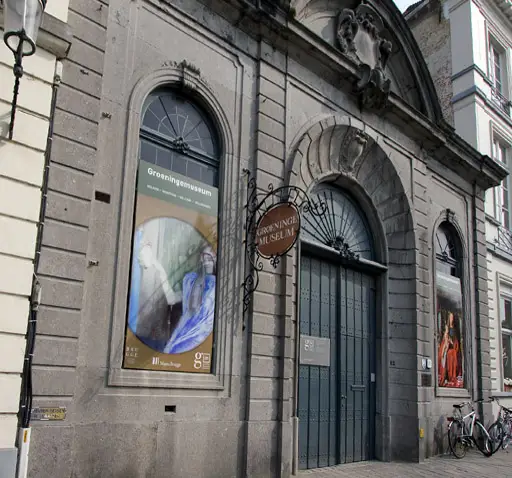
Bruges' main fine art museum, strongest on the Flemish Primitives, Jan van Eyck among them. A quieter, more substantial stop than the Markt crowds outside suggest.
roughly 10:00-18:00 in season, shorter hours or closed in deep winter, multiple independent operators along the canals·check before you go, typically in the EUR 12-15 range per adult, verify current price with the operator·30 minutes
walk in at any of the canal-side jetties, queues build midday in peak season
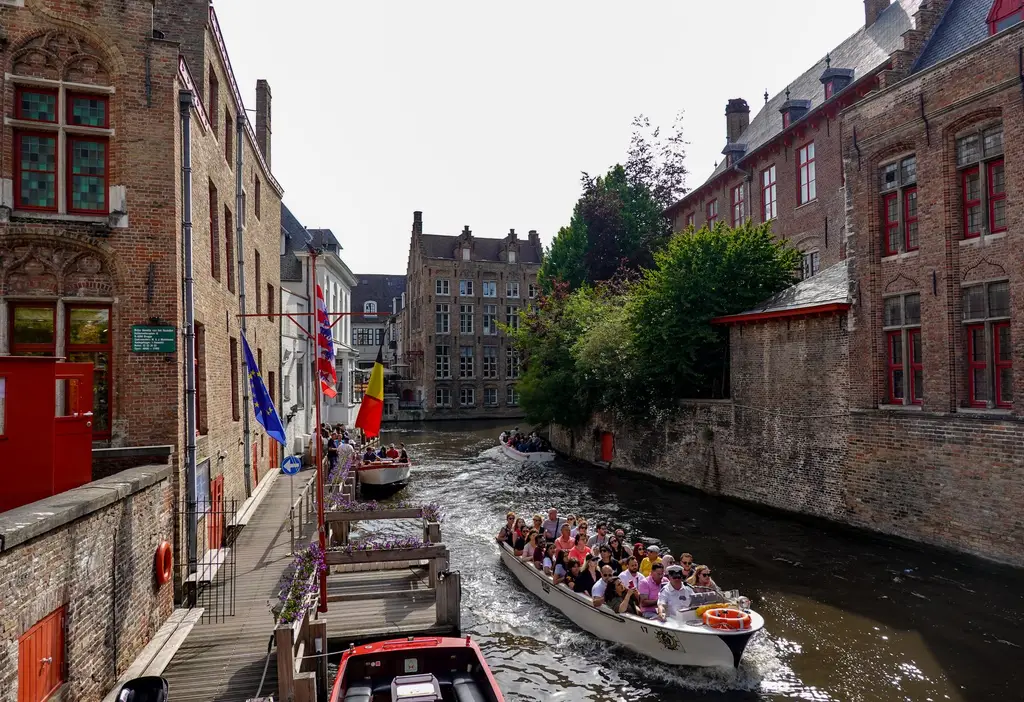
Several independent operators run near-identical 30 minute loops. The view from the water shows angles the streets don't, worth doing once.
6
Church of Our Lady (Onze-Lieve-Vrouwekerk)
check before you go, part of the Musea Brugge 'Flemish Masters in situ' sites·check before you go·30-45 minutes
Home to Michelangelo's Madonna and Child, one of the few Michelangelo sculptures outside Italy. The tower is Bruges' tallest brick structure.
Bruges' new contemporary art gallery in the historic museum district, opened May 8, 2026, launching with a solo show by AI-art pioneer Refik Anadol and a major cultural-history exhibition. This is a genuinely new venue in Bruges rather than a repackaged old one. Worth checking the current program before visiting since shows will rotate.
Belfry tower climb
as of 2026-09
Viral
A climb up 366 narrow steps of Bruges' medieval belfry tower in the Markt for a panoramic view over the city's canals and rooftops. The view is genuinely worth it, but it's a real physical climb in a tight spiral staircase, not for anyone with mobility issues or claustrophobia.
Canal boat tour
as of 2026-09
Viral
Short guided boat trips along Bruges' canals, departing from several docks around the historic centre, passing under stone bridges and past the main medieval landmarks. A genuinely good way to see the city layout in 30 minutes. Queues at the main departure points get long midday in summer.
Markt and Burg square evening walk
as of 2026-09
Viral
Bruges' two central medieval squares, especially atmospheric after the day-trip crowds clear out in the early evening when the buildings are lit. Free, and genuinely the best version of Bruges. During the day these squares are wall-to-wall tour groups off the Brussels day-trip buses.
Dali Cybernetics
as of 2026-09
Viral
Immersive digital exhibition inside the medieval Site Oud Sint-Jan complex, using VR and AR to build an interactive world around Salvador Dali's surrealist work and archives. Slick production in a genuinely odd venue, Gothic infirmary walls next to VR headsets. Worth the ticket for Dali fans or immersive-tech curiosity, skip if you want quiet art.
More to see (1)
7
Beguinage (Begijnhof) and Minnewater
grounds generally open daylight hours, individual house-museum hours vary and are limited·free to walk the grounds·30-45 minutes
A walled courtyard of whitewashed houses, still home to a small Benedictine community, one of the few genuinely quiet corners even in peak season. Minnewater lake sits right beside it.
Where to stay
Historic centre (within the ring canal)
Suits: first-time visitors who want the Markt and canals on their doorstep
Everything is close, but this is also the loudest and most crowded zone by day. Book a room away from the Markt itself for a quieter night.
Sint-Anna / Sint-Gillis (east of the centre)
Suits: travellers who want the same medieval streets with fewer tour groups
A residential feel a 10-15 minute walk from the Markt, close to quieter canal stretches and windmills along the old city walls.
Near Bruges station
Suits: budget stays and easy day-trip connections
About a 20 minute walk or a short bus ride from the centre, with cheaper hotel rates than inside the ring.
Getting there and around
Getting there
Bruges has no airport of its own. Brussels Airport (BRU) connects by train to Bruges in around 1 hour 10 minutes with one change at Brussels-Zuid/Midi, or Brussels Charleroi Airport (CRL) via a shuttle bus to Brussels-Zuid then the same train. Direct trains also run from Brussels city centre stations (around 1 hour), Ghent (around 25 minutes), and Antwerp (around 1 hour 20 minutes, one change).
Getting around
The historic centre is entirely walkable, nothing inside the ring canal is more than 20-25 minutes on foot from anything else, and cars add nothing but parking hassle. Bikes are genuinely popular with locals and a good way to cover more ground; rental shops cluster near the station and the centre. City buses exist for the station-to-centre run (about a 20 minute walk otherwise) but most visitors never need them once they're inside the ring.
Map
City
Recommended (numbered)
Mentioned in an itinerary
Locations on this map
Bruges51.21, 3.22
Belfry of Bruges (Belfort)51.21, 3.22
Markt (Market Square)51.21, 3.22
Basilica of the Holy Blood51.21, 3.23
Groeninge Museum51.21, 3.23
Church of Our Lady (Onze-Lieve-Vrouwekerk)51.20, 3.22
Beguinage (Begijnhof) and Minnewater51.20, 3.22
Flemish51.32, 3.20
Burg51.21, 3.23
Sint-Anna51.21, 3.23
Ghent51.05, 3.73
Gravensteen51.06, 3.72
Brussels50.85, 4.35
Grand Place50.85, 4.35
Manneken Pis50.84, 4.35
Antwerp51.21, 3.22
Cathedral of Our Lady51.22, 4.40
Grote Markt51.21, 3.22
MAS51.21, 3.22
Ypres50.85, 2.88
Flanders Fields50.85, 2.89
In Flanders Fields Museum50.85, 2.89
Menin Gate50.85, 2.89
Design Museum Gent51.06, 3.72
STAM51.04, 3.72
What it costs
Stay
Food
Transport
Activities
Daily cost breakdown, EUR per person
Tier
Stay
Food
Transport
Activities
Total
Budget
EUR 30
EUR 20
EUR 5
EUR 15
EUR 70
Mid-range
EUR 90
EUR 38
EUR 8
EUR 20
EUR 156
Splurge
EUR 190
EUR 70
EUR 15
EUR 30
EUR 305
A canal boat tour (around EUR 12-15), Basilica museum entry (EUR 5), a waffle or fries stop for lunch (EUR 8-10), and a sit-down Flemish dinner with a couple of Belgian beers (EUR 30-35) puts a mid-range day around EUR 130-150 per person with a mid-range hotel room split two ways.
Money savers
The Markt, canal walks, Beguinage grounds, and the Basilica chapel itself are all free; a satisfying half-day costs nothing in entry fees.
The Musea Brugge Card bundles the belfry, Groeninge, and other municipal sites into one ticket valid 72 hours from first use, worth it if you're hitting three or more.
Staying just outside the ring canal near the station cuts hotel cost noticeably while keeping the centre a 15-20 minute walk away.
Bruges is heavily touristed and its food scene shows it, especially on the Markt and around the main canal routes, where menus in five languages and photos of the food are a reliable sign of inflated prices and average cooking. That said, the underlying Belgian staples are genuinely good here: dense Liege-style waffles studded with pearl sugar, twice-fried chips, and chocolate shops that range from serious to gimmicky. The trick in Bruges is walking two or three streets back from the main squares, toward Sint-Anna or the quieter stretches near Sint-Gilliskerk, where prices drop and the food is cooked for locals rather than day-trippers. Beer culture is strong too, with a working brewery, De Halve Maan, still operating inside the old town.
EUR 3-6·stalls and cafes throughout the centre, especially away from the Markt
Must try
Dense and chewy with caramelized pearl sugar baked into the dough, eaten plain or warm off the iron. The better version comes from a stall with a queue of locals, not the empty ones facing the Markt.
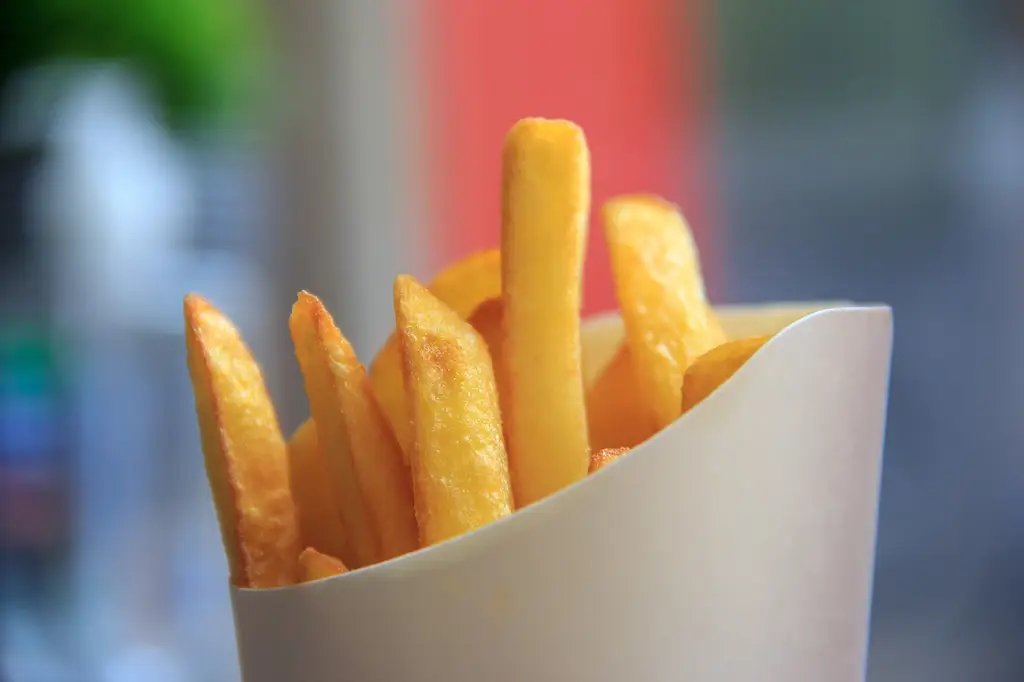
Frites (Belgian fries)
EUR 3-5·frituurs scattered through the centre, twice-fried in the traditional method
Must try
Look for a frituur with a line of locals rather than a stall directly on the Markt. Order with andalouse sauce for a proper local pairing.
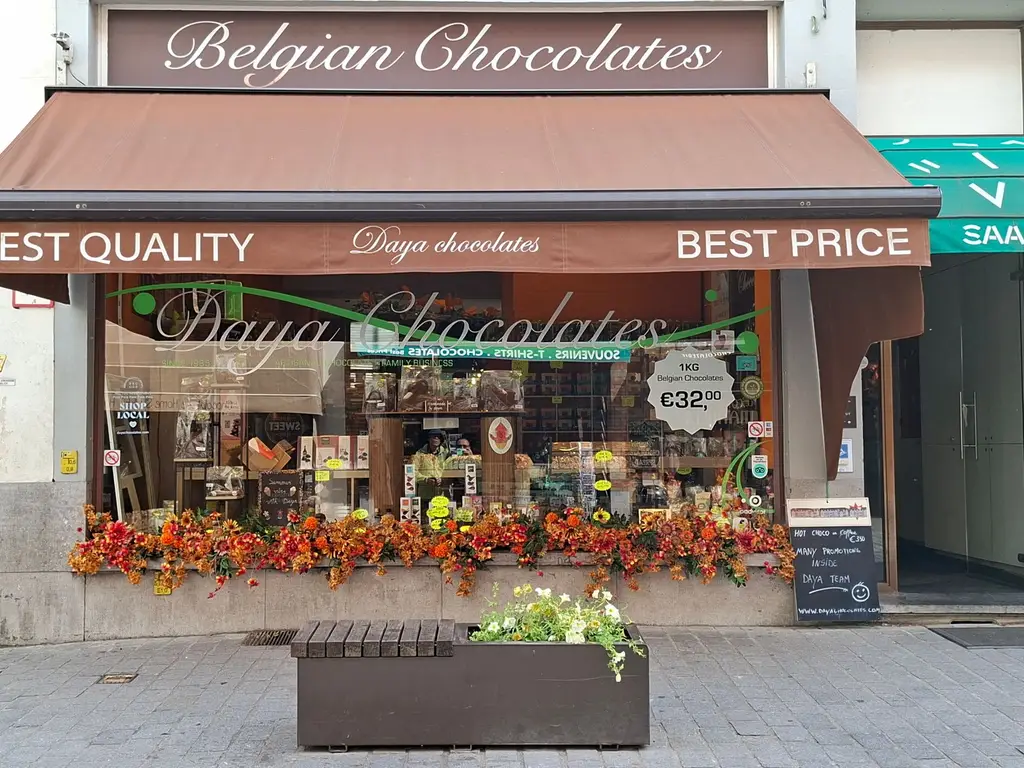
Belgian chocolate
EUR 8-14 per 100g·chocolate shops clustered around the Markt and the main shopping streets
Must try
Bruges has both serious chocolatiers and tourist-grade shops selling identical-looking boxes at very different quality. A shop making chocolate in view of the counter is the better bet.
Flemish stew (stoofvlees)
EUR 18-24·traditional restaurants across the centre, away from the Markt
Must try
Beef slow-braised in dark Belgian beer until it falls apart, served with fries. A cold-weather dish and one of the better reasons to eat a full sit-down meal here.
De Halve Maan brewery beer
EUR 12-15 tour with tasting·De Halve Maan brewery, in the old town
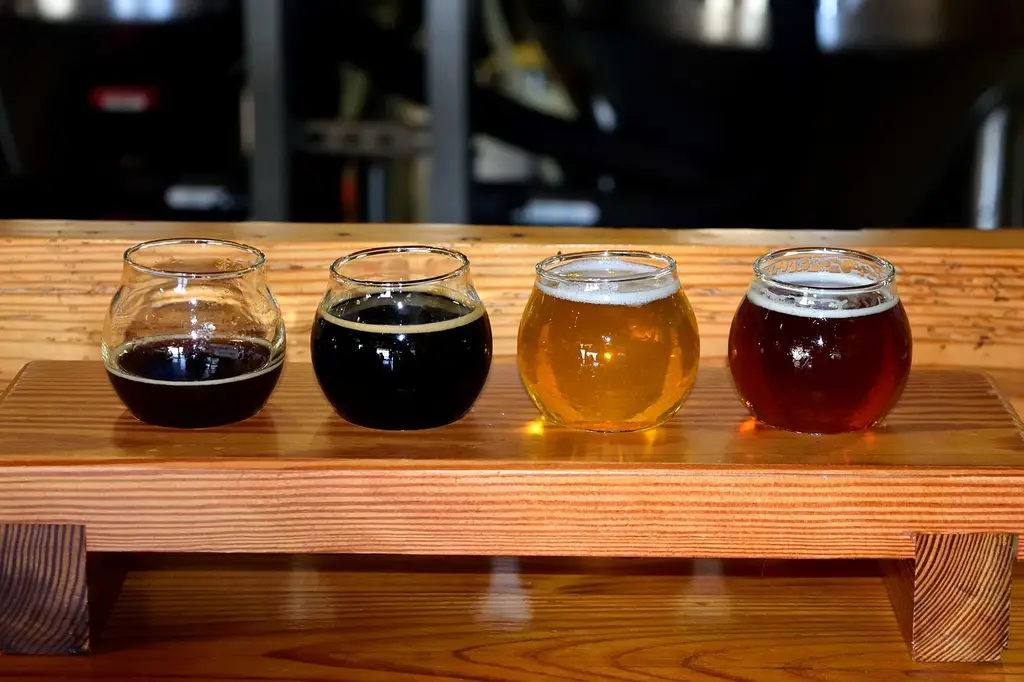
A working brewery still operating inside Bruges' historic centre, pumping its unfiltered beer through an underground pipeline to its bottling plant outside town. Tour and tasting are worth the modest ticket.
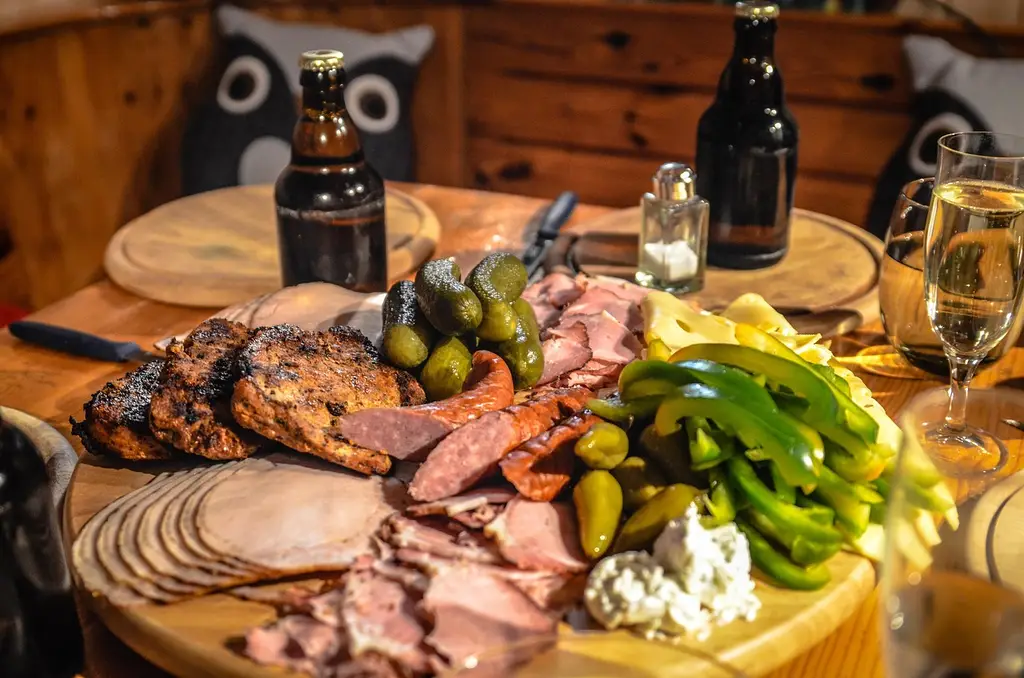
Cheese and charcuterie boards
EUR 14-20·specialty shops and cafes off the main squares
Belgian cheese rarely gets attention next to French and Dutch varieties, but the boards here, paired with regional beer, are a solid low-key dinner option.
De Vlaamsche Pot
as of 2026-09
Viral
A Flemish restaurant running since 1984 known for stoofvlees beef stew, rabbit, and waterzooi, decorated with quirky over-the-top chandeliers. Reviews are genuinely split, some call it the best stew they've had, others got lukewarm food and jarred applesauce at tourist prices. It's not a bad bet but don't expect a guaranteed great meal for what you pay.
Liege vs Brussels waffle debate
as of 2026-09
Viral
Bruges waffle shops split between the dense, caramelized Liege style and the lighter, crisper Brussels style, and comparing the two is a standing local argument. I couldn't verify a genuinely new or viral shop beyond the long-running names, so this is a dish framing, not a business pick.
Kaffee Roger
as of 2026-09
Viral
A cafe and courtyard restaurant opened by a well-known local hospitality couple in the historic center, built around a garden dining space. The courtyard setting is what reviewers rate highest. It's a coffee-and-light-meal stop, not a destination dinner, good for a break between sights.
Mosselbar, Oud Sint-Jan
as of 2026-09
Viral
An all-you-can-eat mussels restaurant that opened in the Oud Sint-Jan area in spring 2026, serving mussels several ways with a terrace. Straightforward and filling. A decent pick if you want mussels without the fixed-menu price of the classic tourist spots. The terrace is the real draw in summer.
Café André
as of 2026-09
Viral
A tapas and comfort-food bar in Sint-Pieters, opened by a hospitality couple returning six years after closing their previous restaurant Quatre Mains. Reviews call it warm, unfussy food built for sharing. Worth it if you want a relaxed meal outside the old-town core.
Habibi
as of 2026-09
Viral
A Syrian-Lebanese restaurant on Langestraat opened in late 2025, still drawing reviews through 2026 for affordable home-style Middle Eastern cooking. Prices are kept deliberately low. A solid change of pace from Flemish stew and waffles if you want something different mid-trip.
Safety and scams
Bruges is very safe by any measure, petty theft in the dense crowds around the Markt and on the busiest canal-side streets is the main real risk. Cobblestones and canal edges have minimal barriers in places, worth some care after dark or after a few beers. Horse-drawn carriages and cyclists share narrow streets with pedestrians, keep an ear out rather than walking with headphones in the busiest lanes.
Common mistakes
Arriving mid-morning and leaving late afternoon, exactly the day-trip coach window, then judging the whole town by the crowds.
Skipping the Beguinage because it isn't as photographed as the Markt, it's one of the better quiet spots in the centre.
Assuming any of the belfry, Groeninge, or Church of Our Lady is free or walk-in without checking current hours and ticketing first, the Musea Brugge system changes and time slots fill in peak season.
Treating Bruges as a full week's destination on its own, the historic centre genuinely does not need more than two days and is better paired with day trips.
Frequently asked questions
How many days do you need in Bruges?
One full day covers the essentials; two to three days lets you see everything at an unhurried pace with early mornings and quiet evenings included. Longer stays are better spent day-tripping to Ghent, Brussels, or Antwerp than trying to find more to do inside a town this compact.
Is Bruges too crowded to visit?
It's genuinely crowded from roughly mid-morning to late afternoon, when day-trip coaches fill the Markt and main canal routes. Before 9am and after the coaches clear out in the early evening, the same streets are close to empty. Staying overnight rather than day-tripping is the real fix.
Is Bruges worth a day trip from Brussels?
Yes, but you'll see the busiest version of the town. A day trip from Brussels takes around an hour each way and covers the Markt, belfry, and canals, though arriving on the earliest train and skipping the midday peak matters more here than almost anywhere else in Belgium.
How much does the belfry climb cost in Bruges?
It's part of the Musea Brugge network's paid ticketing and current pricing should be checked on museabrugge.be before you go, along with whether a time-slot reservation is required, which it often is in peak season.
Is Bruges walkable?
Completely. The historic centre inside the ring canal is small enough that nothing is more than 20-25 minutes on foot from anything else. Cars add nothing but parking cost and hassle; bikes are popular locally if you want to cover more ground.
What is the Bruges Beguinage?
A walled courtyard of whitewashed houses that once held a community of lay religious women (beguines) and today houses a small Benedictine order. It's free to walk the grounds and, unusually for central Bruges, stays quiet even at peak times.
Can you see Bruges canals without a boat tour?
Yes, the canal-side streets and bridges give good views on foot for free. A 30 minute boat tour adds angles the streets don't and is worth doing once, but it's not essential to appreciating the canals.
Is Bruges better than Ghent?
Bruges is more picture-perfect and far more crowded; Ghent has a similar medieval core, a genuine castle, and a fraction of the tour groups. Many visitors who do both end up preferring Ghent's atmosphere, even though Bruges gets the bigger reputation.
What's the best time of day to see Bruges without crowds?
Before around 9am and after roughly 5-6pm once day-trip coaches have left. The Markt, Burg square, and main canal routes are dramatically quieter in both windows, and staying overnight is the only reliable way to catch them.
Do I need to book Bruges attractions in advance?
The belfry climb and some Musea Brugge sites strongly encourage or require time-slot reservations, especially in peak season, given the narrow medieval stairways involved. The Basilica of the Holy Blood and Beguinage grounds are walk-in.